
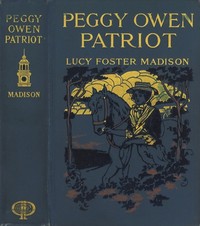
Peggy Owen, Patriot: A Story for Girls
Written by Lucy Foster Madison
Chaptra reads alongside you — AI insights, chapter breakdowns and reader discussions for every book. Join free
About this book
Reading guide
Themes, characters and key ideas in Peggy Owen, Patriot: A Story for Girls, written by Chaptra AI.
- about 8 hours
- intermediate
- uplifting
- historical
- patriotic
Lucy Foster Madison's "Peggy Owen, Patriot" is a compelling historical novel set during the American Revolutionary War, focusing on the titular Peggy Owen, a young Quaker girl. The narrative chronicles Peggy's journey from a traditional Quaker upbringing to an ardent supporter of the American cause, navigating the moral complexities and dangers of a nation embroiled in conflict. Beginning with a perilous journey to Philadelphia in September 1778, the story quickly establishes the precariousness of wartime life and Peggy's burgeoning internal conflict between her pacifist faith and her burgeoning patriotic fervor. It explores themes of courage, loyalty, and personal sacrifice, portraying a young woman's coming-of-age amidst national turmoil. The book lays the groundwork for Peggy's adventures as she strives to aid her country while grappling with her identity.
“"My heart cries out for liberty, even if my Quaker tongue must remain silent."”
Key themes
- Patriotism vs. Pacifism
- This is the central thematic conflict, explored through Peggy Owen's internal struggle. As a Quaker, Peggy is raised in a faith that advocates non-violence and neutrality, yet she feels a strong pull towards supporting the American cause for liberty, which necessitates armed conflict. The theme delves into the moral complexities of loyalty to one's faith versus loyalty to one's burgeoning nation, questioning how an individual can reconcile deeply held personal beliefs with external political and military demands.
- Courage and Sacrifice
- The narrative explores various forms of courage—not just physical bravery in battle, but also moral courage to defy societal or religious expectations, and the emotional fortitude to endure hardship. Sacrifice is depicted through the personal costs of war, including the disruption of daily life, the loss of security, and the difficult choices individuals must make for a greater cause. Peggy's journey itself is an act of courage, as she steps beyond her sheltered life.
- Identity and Belonging
- Peggy's story is fundamentally a coming-of-age narrative centered on her search for identity. She grapples with who she is as a Quaker, a young woman, and an emerging American citizen during a foundational period. The conflict between her inherited identity (Quaker) and her developing personal and national identity (Patriot) drives much of her character development. She seeks a sense of belonging in a fractured society, finding it not necessarily in a single group, but in her own convictions.
Worth discussing
How does Peggy's Quaker background both challenge and strengthen her commitment to the Patriot cause?
Chapter-by-chapter breakdowns, character arcs and the full thematic analysis come with a free account.
Discussions
No one has started one yet
Questions this book opens up
No discussions yet
Be the first to start a discussion about this book!
Sign up to start the discussionReviews
No reviews yet
Be the first to review this book!