
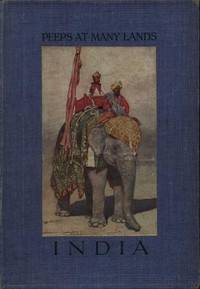
Peeps at Many Lands—India
Written by John Finnemore
Chaptra reads alongside you — AI insights, chapter breakdowns and reader discussions for every book. Join free
About this book
Reading guide
Themes, characters and key ideas in Peeps at Many Lands—India, written by Chaptra AI.
- about 8 hours
- intermediate
- exploratory
- educational
- descriptive
Peeps at Many Lands—India" by John Finnemore is an early 20th-century travelogue offering European readers a vivid exploration of India's diverse regions. The book meticulously details cultural variations, historical contexts, and the unique lifestyles of its inhabitants through insightful descriptions and illustrations. Beginning in Bombay, it captures the bustling native quarters, vibrant bazaars, and distinct communities like the Parsees, serving as an engaging gateway to the subcontinent. Finnemore's work aims to present a comprehensive, albeit externally observed, snapshot of India's rich tapestry, setting a tone of curiosity and detailed observation for subsequent regional explorations.
“Bombay, the gateway to India for many a European traveler, presents a spectacle of unparalleled vibrancy and contrast.”
Key themes
- Cultural Diversity
- The book explicitly aims to showcase the vast cultural tapestry of India, detailing different communities, their unique customs, attire, and lifestyles. Finnemore highlights the presence of various nationalities and distinct groups like the Parsees, emphasizing the rich mosaic of traditions that coexist within the subcontinent.
- Colonial Gaze and Orientalism
- As an early 20th-century travelogue written by a European for a European audience about a colonized land, the book inherently operates under a colonial gaze. It frames India as a subject of observation and explanation, often emphasizing its 'exotic' qualities and 'otherness' from a Western perspective. While seemingly appreciative, this perspective can inadvertently simplify or romanticize Indian realities, reflecting the power dynamics of the era.
- Exploration and Education
- The fundamental purpose of the 'Peeps at Many Lands' series, and this book in particular, is to educate and inform its readership about distant lands. It serves as a vicarious journey, allowing readers to 'explore' India through Finnemore's observations. The book aims to broaden geographical and cultural understanding, making unknown parts of the world accessible and comprehensible.
Worth discussing
How does Finnemore's portrayal of India reflect the colonial attitudes prevalent in the early 20th century?
Chapter-by-chapter breakdowns, character arcs and the full thematic analysis come with a free account.
Discussions
No one has started one yet
Questions this book opens up
No discussions yet
Be the first to start a discussion about this book!
Sign up to start the discussionReviews
No reviews yet
Be the first to review this book!