
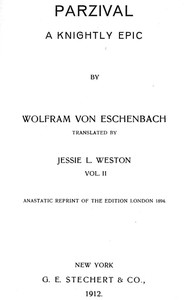
Parzival: A Knightly Epic (vol. 2 of 2)
Written by von Eschenbach Wolfram
Chaptra reads alongside you — AI insights, chapter breakdowns and reader discussions for every book. Join free
About this book
Reading guide
Themes, characters and key ideas in Parzival: A Knightly Epic (vol. 2 of 2), written by Chaptra AI.
- about 12 hours
- advanced
- epic
- chivalrous
- spiritual
Wolfram von Eschenbach's "Parzival: A Knightly Epic (vol. 2 of 2)" delves deeper into the complex world of Arthurian legend, continuing the titular knight's arduous quest for the Holy Grail. While Parzival's ultimate destiny remains the narrative's core, this second volume prominently features the adventures of Sir Gawain, exploring his challenges with love, honor, and reputation amidst a backdrop of enchantment and peril. The epic masterfully intertwines themes of chivalry, duty, and spiritual redemption, contrasting worldly valor with the profound search for divine understanding. As characters grapple with their destinies, the narrative unfolds with rich descriptions and emotional depth, culminating in Parzival's eventual enlightenment and the resolution of his spiritual journey.
“He who lives by truth and faith, though he err, finds his way back to grace.”
Key themes
- The Quest for the Holy Grail and Spiritual Redemption
- This is the central theme, focusing on Parzival's arduous journey to understand and ultimately achieve the Holy Grail. It explores themes of divine grace, forgiveness, and the spiritual purification required to serve the Grail. Parzival's initial failure and subsequent despair highlight the importance of compassion, humility, and faith over mere adherence to rules.
- Chivalry, Honor, and Duty
- The epic meticulously explores various facets of chivalry, contrasting the worldly, courtly chivalry (often embodied by Gawain) with the more spiritual, compassionate chivalry required for the Grail quest (Parzival). It questions what truly constitutes a 'good knight' and emphasizes duty not just to a lord, but to a higher moral and spiritual code.
- Love and Loyalty (Courtly vs. Conjugal)
- The epic presents different forms of love. Gawain's adventures often involve courtly love, characterized by intense romantic longing, challenges, and sometimes infidelity or shifting affections. In contrast, Parzival's steadfast love for his wife, Condwiramurs, represents a purer, more enduring and conjugal bond, deeply intertwined with his spiritual quest.
Worth discussing
How does Gawain's quest for worldly honor and love contrast with Parzival's spiritual journey for the Grail? What does this say about different forms of chivalry?
Chapter-by-chapter breakdowns, character arcs and the full thematic analysis come with a free account.
Discussions
No one has started one yet
Questions this book opens up
No discussions yet
Be the first to start a discussion about this book!
Sign up to start the discussionReviews
No reviews yet
Be the first to review this book!