
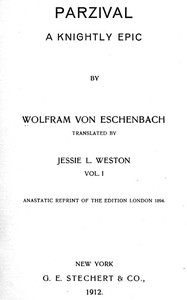
Parzival: A Knightly Epic (vol. 1 of 2)
Written by von Eschenbach Wolfram
Chaptra reads alongside you — AI insights, chapter breakdowns and reader discussions for every book. Join free
About this book
Reading guide
Themes, characters and key ideas in Parzival: A Knightly Epic (vol. 1 of 2), written by Chaptra AI.
- about 20 hours
- advanced
- chivalric
- philosophical
- questing
Wolfram von Eschenbach's "Parzival" is a monumental medieval epic poem from the early 13th century, chronicling a profound journey of chivalry, love, and spiritual redemption, centered on the quest for the Holy Grail. Volume one intricately lays the groundwork for the hero's destiny by first detailing the adventurous life of his father, Gamuret. Gamuret's initial exploits, driven by a thirst for fame and knightly deeds, lead him through various kingdoms, including his marriage to Queen Belakané and later, to Herzeloyde, Parzival's mother. This foundational narrative establishes the epic's rich tapestry of honor, duty, and the complex interplay between earthly desires and spiritual aspirations, foreshadowing the profound challenges and ultimate enlightenment awaiting Parzival.
“He who is not in love, let him cease to live.”
Key themes
- Chivalry and Knighthood
- The epic meticulously explores the ideals and realities of medieval chivalry. Gamuret embodies the worldly knight, driven by honor, glory, and prowess in battle, but also by a restless desire for adventure. His story critiques the limitations of purely secular knighthood, setting the stage for Parzival's later, more spiritually focused interpretation.
- Love and Marriage
- Love is depicted in various forms: the passionate, almost obsessive love of Gamuret's wives for him, his own restless affection, and the duties associated with dynastic marriages. The epic explores the joys and heartbreaks of these bonds, and their role in shaping destinies and lineages.
- Fate and Destiny
- The narrative frequently touches upon the idea of predetermined paths and the hand of destiny, particularly in the unfolding of Gamuret's life and the foreshadowing of Parzival's future. While characters make choices, there's an underlying sense that a higher power guides their ultimate trajectory.
Worth discussing
How does Wolfram von Eschenbach redefine the concept of chivalry through Gamuret's journey and his ultimate fate?
Chapter-by-chapter breakdowns, character arcs and the full thematic analysis come with a free account.
Discussions
No one has started one yet
Questions this book opens up
No discussions yet
Be the first to start a discussion about this book!
Sign up to start the discussionReviews
No reviews yet
Be the first to review this book!