
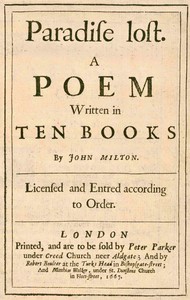
Paradise Lost
Written by John Milton
Chaptra reads alongside you — AI insights, chapter breakdowns and reader discussions for every book. Join free
About this book
Reading guide
Themes, characters and key ideas in Paradise Lost, written by Chaptra AI.
- about 25 hours
- advanced
- epic
- tragic
- philosophical
John Milton's "Paradise Lost" is an epic poem that reinterprets the biblical story of the Fall of Man, exploring profound theological questions about free will, divine justice, and the nature of good and evil. The narrative primarily focuses on Satan's rebellion in Heaven, his subsequent banishment to Hell, and his vengeful plot to corrupt humanity, leading to Adam and Eve's disobedience and expulsion from Eden. Through majestic blank verse and classical allusions, Milton delves into the psychological complexities of his characters and challenges conventional interpretations of God, presenting a monumental work that seeks to "justify the ways of God to men." It is a profound meditation on choice, consequence, and the possibility of redemption amidst tragic loss.
“Of Man's first disobedience, and the fruit / Of that forbidden tree, whose mortal taste / Brought death into the World, and all our woe, / With loss of Eden, till one greater Man / Restore us, and regain the blissful Seat.”
Key themes
- Free Will vs. Predestination
- This is the central theological question Milton grapples with. He asserts that God created humans with free will, making their disobedience a conscious choice rather than a predetermined fate. This allows Milton to "justify the ways of God to men," by showing that humanity's fall was not God's fault but a result of their own misuse of liberty.
- Disobedience and Its Consequences
- The entire narrative hinges on the act of disobedience—first Satan's rebellion against God, then Adam and Eve's transgression against God's single command. Milton explores the profound and far-reaching consequences of these acts, including the loss of innocence, suffering, death, and expulsion from Paradise.
- Good vs. Evil
- Milton presents a cosmic struggle between absolute good (God and his loyal angels) and absolute evil (Satan and his fallen legions). However, the poem also delves into the complexities of this binary, particularly through Satan's character, who, despite being evil, possesses qualities like courage and leadership, making the nature of evil more nuanced and psychologically compelling.
Worth discussing
To what extent is Satan a sympathetic character? Is he a tragic hero or purely evil?
Chapter-by-chapter breakdowns, character arcs and the full thematic analysis come with a free account.
Discussions
No one has started one yet
Questions this book opens up
No discussions yet
Be the first to start a discussion about this book!
Sign up to start the discussionReviews
No reviews yet
Be the first to review this book!