
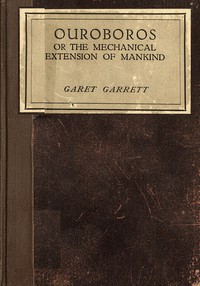
Ouroboros; or, the mechanical extension of mankind
Written by Garet Garrett
Chaptra reads alongside you — AI insights, chapter breakdowns and reader discussions for every book. Join free
About this book
Reading guide
Themes, characters and key ideas in Ouroboros; or, the mechanical extension of mankind, written by Chaptra AI.
- about 8 hours
- advanced
- philosophical
- analytical
- critical
Garet Garrett's "Ouroboros; or, the mechanical extension of mankind" is a profound philosophical treatise from the early 20th century, exploring humanity's complex and often paradoxical relationship with mechanical innovation. The work traces humanity's historical drive to escape physical labor through technology, from early agricultural tools to advanced industrial machinery. Garrett argues that this quest, while seemingly liberating, has inadvertently trapped mankind in an unending, self-devouring cycle of production, consumption, and the maintenance of the very systems designed to serve them. Through this central metaphor of the Ouroboros, the book critically examines the economic, social, and existential implications of industrialization, questioning the true nature of progress and human fulfillment in an increasingly mechanized world.
“Every machine built to save labor ultimately demands its own sustenance, binding us to a new, more complex toil.”
Key themes
- The Ouroboros Cycle / Paradox of Technological Progress
- This is the central thesis of the book. Garrett argues that humanity's relentless pursuit of technological solutions to escape labor invariably leads to new forms of work, new demands for production, and an unending cycle of consumption necessary to sustain the very mechanical systems created. The symbol of the Ouroboros—a serpent devouring its own tail—perfectly encapsulates this self-perpetuating, inescapable loop.
- The Nature of Labor and Human Purpose
- Garrett delves into what it means to work and what it means to be free from work. He questions whether mechanization truly liberates humanity or merely redefines the nature of toil, shifting it from physical exertion to the mental and logistical demands of managing complex systems. The theme explores the existential implications of a world where human effort is increasingly dedicated to feeding the machines.
- Economic Systems and Consumption
- The book critically examines the economic structures that emerge from advanced mechanization. Garrett highlights how the capacity for surplus production, far exceeding immediate human needs, creates an imperative for artificial demand and engineered consumption. This theme explores how economic necessity, driven by the need to keep machines running and capital flowing, dictates societal patterns of buying and selling.
Worth discussing
How does Garrett's Ouroboros metaphor resonate with contemporary issues like automation, AI, and consumer culture?
Chapter-by-chapter breakdowns, character arcs and the full thematic analysis come with a free account.
Discussions
No one has started one yet
Questions this book opens up
No discussions yet
Be the first to start a discussion about this book!
Sign up to start the discussionReviews
No reviews yet
Be the first to review this book!