
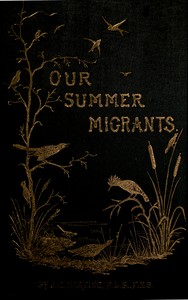
Our Summer Migrants: An Account of the Migratory Birds Which Pass the Summer in the British Islands.
Written by James Edmund Harting
Chaptra reads alongside you — AI insights, chapter breakdowns and reader discussions for every book. Join free
About this book
Reading guide
Themes, characters and key ideas in Our Summer Migrants: An Account of the Migratory Birds Which Pass the Summer in the British Islands., written by Chaptra AI.
- about 10 hours
- advanced
- informative
- observational
- appreciative
James Edmund Harting's "Our Summer Migrants" is a significant late 19th-century ornithological study that meticulously documents the various migratory bird species spending their summer months in the British Isles. The book serves as an educational resource, detailing the habits, nesting behaviors, and intricate migratory patterns of these fascinating birds. Harting masterfully blends scientific observation with an appreciative tone, beginning with an introduction that celebrates the annual arrival of these mysterious travelers and their profound impact on the British countryside. Through dedicated chapters, he offers deep insights into specific species like the Wheatear, Whinchat, and Stonechat, making a valuable contribution to natural history literature of its time.
“There are few events in the annual cycle of nature more truly delightful to the observer than the return of our summer migrants.”
Key themes
- Scientific Observation and Classification
- Central to the book is the rigorous application of 19th-century scientific methodology: meticulous observation, detailed description, and systematic classification. Harting's work exemplifies the empirical approach to natural history, carefully documenting species' habits, habitats, and behaviors. This theme underscores the importance of direct study and data collection in building a comprehensive understanding of the natural world.
- The Wonder and Mystery of Nature
- Harting repeatedly emphasizes the awe-inspiring nature of bird migration, framing it as a profound mystery that science seeks to unravel but which also evokes deep admiration. This theme highlights the human capacity for wonder in the face of natural phenomena and the enduring questions that even detailed scientific observation cannot fully answer. It speaks to the beauty and complexity inherent in the natural world.
- The Rhythms and Regularity of Nature
- The book repeatedly emphasizes the predictable, cyclical nature of bird migration, highlighting the 'regularity with which they return' each year. This theme speaks to the deep-seated patterns and inherent order within the natural world, suggesting a grand, underlying design or instinct that governs these complex movements. It contrasts with human unpredictability, presenting nature as a realm of reliable, ancient rhythms.
Worth discussing
How does Harting's approach to ornithology reflect the scientific methods and understanding of the late 19th century?
Chapter-by-chapter breakdowns, character arcs and the full thematic analysis come with a free account.
Discussions
No one has started one yet
Questions this book opens up
No discussions yet
Be the first to start a discussion about this book!
Sign up to start the discussionReviews
No reviews yet
Be the first to review this book!