
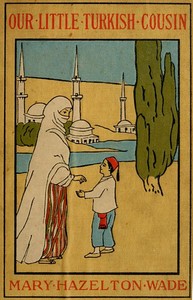
Our Little Turkish Cousin
Written by Mary Hazelton Blanchard Wade
Chaptra reads alongside you — AI insights, chapter breakdowns and reader discussions for every book. Join free
About this book
Read it with a club
Small groups reading the same books and talking as they go.


News
- 4 members
- 1,813 discussions
- Active Sep 11
Read Our Little Turkish Cousin alongside people who are reading it too.
Also here: News Bulletin, Just Joking....
Chaptra Prime — paid clubs, every club feature, and unlimited reading support, for $5 a month or $60 once.
See PrimeReading guide
Themes, characters and key ideas in Our Little Turkish Cousin, written by Chaptra AI.
- about 8 hours
- beginner
- educational
- charming
- descriptive
Our Little Turkish Cousin by Mary Hazelton Blanchard Wade introduces young readers to early 20th-century Turkish culture through the eyes of Osman, a privileged boy in Constantinople. The narrative chronicles Osman's life from his birth celebrations and luxurious upbringing to his experiences at school and with friends, all set against a backdrop of distinct customs and festivities. Designed as an educational tool, the book aims to blend cultural lessons with an endearing story, showcasing daily life and traditions through Osman's innocent perspective. It highlights the unique social and cultural landscape of Turkey, though from a viewpoint largely unaware of underlying societal disparities.
“Though Osman could not remember his first birthday, the echoes of its joyful celebration lived on in the stories his mother told.”
Key themes
- Cultural Immersion and Education
- The primary theme of the book is to introduce young readers to Turkish culture. It meticulously details daily life, customs, celebrations, and social structures, acting as an educational guide. Through Osman's experiences, readers learn about Turkish food, clothing, family rituals, schooling, and religious practices, fostering an early understanding of global diversity.
- Childhood and Innocence
- The narrative is filtered through the innocent and often uncritical perspective of a young boy. Osman's sheltered upbringing and his obliviousness to 'societal disparities' highlight a specific aspect of childhood—a period of wonder and discovery, often protected from the harsher realities of the adult world. This innocence allows for a gentle, non-threatening introduction to a foreign culture.
- Family and Tradition
- Family is presented as the cornerstone of Osman's life and Turkish society. The book emphasizes the importance of familial bonds, the passing down of customs through generations, and the role of tradition in shaping individual and collective identity. Celebrations, daily rituals, and the roles of parents are all explored through this lens.
Worth discussing
How does 'Our Little Turkish Cousin' attempt to bridge cultural gaps for young readers, and what are its successes and limitations in doing so?
Chapter-by-chapter breakdowns, character arcs and the full thematic analysis come with a free account.
Discussions
No one has started one yet
Questions this book opens up
No discussions yet
Be the first to start a discussion about this book!
Sign up to start the discussionReviews
No reviews yet
Be the first to review this book!