
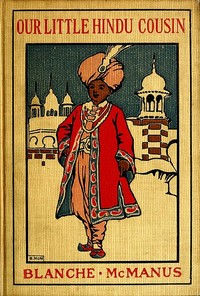
Our Little Hindu Cousin
Written by Blanche McManus
Chaptra reads alongside you — AI insights, chapter breakdowns and reader discussions for every book. Join free
About this book
Reading guide
Themes, characters and key ideas in Our Little Hindu Cousin, written by Chaptra AI.
- about 8 hours
- beginner
- uplifting
- educational
- innocent
Blanche McManus's "Our Little Hindu Cousin" is an early 20th-century children's novel, part of the "Little Cousin Series," designed to introduce young readers to global cultures. Set in Lucknow, India, the story centers on two boys, Chola and his cousin Mahala, as they navigate their daily lives, offering a vivid portrayal of traditional Hindu customs and family dynamics. The narrative opens with Chola's excitement over new goats, quickly moving into the boys' playful morning routine, which includes religious bathing and interactions with Chola's mischievous pet monkey, Jam. Through their adventures and interactions, the book provides a glimpse into their community's vibrant atmosphere and cultural practices, serving as an educational tool for its young audience.
“The morning sun kissed the ancient stones of Lucknow, promising a day of new adventures.”
Key themes
- Cultural Immersion and Education
- The primary theme of the book, as part of the 'Little Cousin Series,' is to introduce young Western readers to the daily lives, customs, and environment of children from a different culture. It aims to foster understanding and curiosity about India and Hindu traditions through the relatable experiences of its child protagonists. The narrative serves as a gentle guide, explaining cultural practices and social norms.
- Childhood Innocence and Adventure
- Central to the narrative is the portrayal of childhood through the eyes of Chola and Mahala. Their daily lives, even with their cultural specificity, are filled with the universal elements of play, excitement, curiosity, and minor adventures. The book captures the simple joys and discoveries of youth, making the foreign setting accessible through the lens of relatable childhood experiences.
- Tradition and Religion
- The narrative explicitly delves into the 'traditional Hindu lifestyle' and 'cultural practices,' particularly highlighting the role of religion in daily life. Customs like bathing are presented not just as hygiene but as significant religious acts, illustrating how faith is interwoven into the fabric of the community's existence. The book aims to respectfully introduce these traditions to young readers.
Worth discussing
How does the book's portrayal of Indian culture compare to your own understanding or modern representations?
Chapter-by-chapter breakdowns, character arcs and the full thematic analysis come with a free account.
Discussions
No one has started one yet
Questions this book opens up
No discussions yet
Be the first to start a discussion about this book!
Sign up to start the discussionReviews
No reviews yet
Be the first to review this book!