
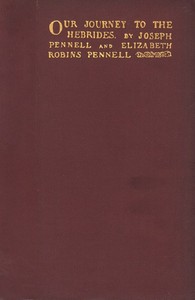
Our Journey to the Hebrides
Written by Elizabeth Robins Pennell,Joseph Pennell
Chaptra reads alongside you — AI insights, chapter breakdowns and reader discussions for every book. Join free
About this book
Reading guide
Themes, characters and key ideas in Our Journey to the Hebrides, written by Chaptra AI.
- about 8 hours
- intermediate
- Humorous
- Reflective
- Somber
In "Our Journey to the Hebrides," Elizabeth Robins Pennell and Joseph Pennell chronicle their late 19th-century travelogue through the Scottish Highlands and Islands. Initially hesitant and burdened by preconceived notions, the authors embark on an extensive walking tour, humorously detailing their preparations and experiences from Edinburgh onward. As they traverse stunning landscapes, they offer candid reflections on the realities of travel and the stark socio-economic conditions, particularly the plight of the crofters, challenging the romanticized portrayals of the region. The book delves into a deeper understanding of Scotland's contemporary struggles alongside its historical significance, marking a journey that is both physical and intellectual, filled with observations of beauty and despair.
“Our journey began not with eagerness, but with a certain dread, for Scotland, to our minds, was a land shrouded in mists of ignorance and old wives' tales.”
Key themes
- Romanticism vs. Reality
- This is the central theme, as the Pennells explicitly challenge and dismantle the idealized, picturesque depictions of the Scottish Highlands and Islands. They consistently juxtapose the region's breathtaking natural beauty with the harsh socio-economic realities and the struggles of its inhabitants, particularly the crofters. The book argues that true understanding requires looking beyond superficial beauty to confront uncomfortable truths.
- Socio-economic Injustice and Poverty
- A core concern of the book is the widespread poverty and hardship faced by the crofters and local populations of the Hebrides. The Pennells meticulously document the poor living conditions, limited opportunities, and the general struggle for survival in a region impacted by historical policies (like the Highland Clearances, though not explicitly named in the summary, implied by 'plight of the crofters') and economic neglect. This theme underscores the human cost behind the beautiful scenery.
- The Nature of Travel and Observation
- The book itself is a meditation on the process of travel and what it means to truly 'see' a place. The Pennells embark with initial ignorance and preconceived notions, and their journey becomes a transformative experience where they actively learn, question, and challenge their own perspectives. It highlights the intellectual and personal growth that can arise from immersive travel, emphasizing the importance of candid, critical observation over passive consumption of sights.
Worth discussing
How do the Pennells challenge and dismantle romanticized notions of Scotland? Provide specific examples from their observations.
Chapter-by-chapter breakdowns, character arcs and the full thematic analysis come with a free account.
Discussions
No one has started one yet
Questions this book opens up
No discussions yet
Be the first to start a discussion about this book!
Sign up to start the discussionReviews
No reviews yet
Be the first to review this book!