
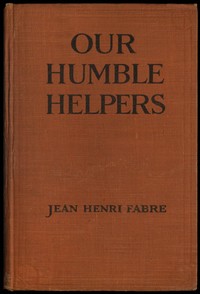
Our Humble Helpers: Familiar Talks on the Domestic Animals
Written by Jean-Henri Fabre
Chaptra reads alongside you — AI insights, chapter breakdowns and reader discussions for every book. Join free
About this book
Reading guide
Themes, characters and key ideas in Our Humble Helpers: Familiar Talks on the Domestic Animals, written by Chaptra AI.
- about 10 hours
- intermediate
- informative
- observational
- appreciative
Jean-Henri Fabre's "Our Humble Helpers" is a delightful and insightful exploration into the lives and behaviors of common domestic animals, presented through a series of 'familiar talks.' Blending meticulous scientific observation with an accessible, often poetic narrative style, Fabre invites readers to look at creatures like dogs, cats, chickens, and cows with renewed curiosity and respect. The book serves as both an educational text, revealing the biology and habits of these animals, and a philosophical meditation on their indispensable role in human life and the intricate beauty of the natural world. It champions a deeper appreciation for the intelligence and instinct of our animal companions and providers, fostering a sense of wonder for the everyday miracles of nature.
“The more I study nature, the more I am struck by the endless ingenuity of her arrangements.”
Key themes
- Human-Animal Relationship
- This theme explores the multifaceted bond between humans and domestic animals, ranging from companionship and loyalty (dogs, cats) to utilitarian roles in agriculture (cows, chickens, horses). Fabre emphasizes a reciprocal relationship, where animals provide service, food, and comfort, and humans, in turn, are responsible for their care and welfare. He often highlights the historical evolution of these relationships.
- The Wonders of Instinct and Adaptation
- Fabre consistently marvels at the innate, unlearned behaviors of animals, attributing them to a profound instinctual wisdom. He details how each species is perfectly adapted to its environment and role, showcasing the intricate design and efficiency of nature. This theme celebrates the 'genius' of instinct, often presenting it as superior to human reason in specific contexts.
- Observation and Scientific Inquiry
- This theme underscores the importance of careful, patient, and empathetic observation as the foundation of understanding the natural world. Fabre models this approach throughout the book, encouraging readers to adopt a similar mindset. He demonstrates how close scrutiny can reveal extraordinary details in the most ordinary of creatures, transforming everyday experiences into opportunities for scientific discovery.
Worth discussing
How does Fabre encourage a deeper appreciation for domestic animals, and what specific examples stand out?
Chapter-by-chapter breakdowns, character arcs and the full thematic analysis come with a free account.
Discussions
No one has started one yet
Questions this book opens up
No discussions yet
Be the first to start a discussion about this book!
Sign up to start the discussionReviews
No reviews yet
Be the first to review this book!