
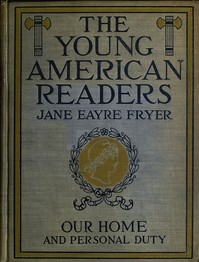
Our Home and Personal Duty
Written by Jane Eayre Fryer
Chaptra reads alongside you — AI insights, chapter breakdowns and reader discussions for every book. Join free
About this book
Reading guide
Themes, characters and key ideas in Our Home and Personal Duty, written by Chaptra AI.
- about 6 hours
- beginner
- educational
- instructive
- wholesome
Our Home and Personal Duty by Jane Eayre Fryer is an early 20th-century educational text designed to instill civic virtues and responsibilities in children. Through relatable stories, practical lessons, and interactive methods like dramatization, the book emphasizes the foundational principles of good citizenship, such as honesty, helpfulness, and respect. It highlights the crucial concept of community interdependence, illustrating how individual actions contribute to the collective well-being. The text aims to train young readers to become active and conscientious members of society, using the experiences of characters like the Duwell family to make abstract civic concepts tangible and engaging.
“A good citizen is not merely one who obeys the law, but one who actively seeks the good of all.”
Key themes
- Civic Duty and Responsibility
- This is the core theme, exploring what it means to be an active, contributing member of society. The book breaks down civic duty into practical, everyday actions, from respecting public property to participating in community life. It emphasizes that individual actions have collective impact.
- Community Interdependence
- The book stresses that no individual exists in isolation; everyone's actions affect others and the community as a whole. It fosters an understanding of how different roles and contributions are necessary for a harmonious and functional society, promoting empathy and cooperation.
- Moral Education and Virtue
- Fryer's work is fundamentally about character building. It identifies and promotes specific virtues—honesty, helpfulness, respect, kindness, diligence—as the bedrock of both personal integrity and good citizenship. The book argues that these virtues must be consciously taught and practiced from a young age.
Worth discussing
How do the civic virtues emphasized in the early 20th century compare to those valued today? Are there any significant differences or enduring similarities?
Chapter-by-chapter breakdowns, character arcs and the full thematic analysis come with a free account.
Discussions
No one has started one yet
Questions this book opens up
No discussions yet
Be the first to start a discussion about this book!
Sign up to start the discussionReviews
No reviews yet
Be the first to review this book!