
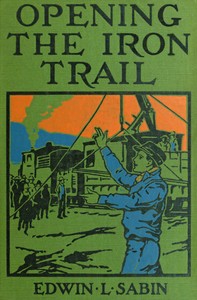
Opening the iron trail : $b or, Terry as a "U. Pay." man (a semi-centennial story)
Written by Edwin L. (Edwin Legrand) Sabin
Chaptra reads alongside you — AI insights, chapter breakdowns and reader discussions for every book. Join free
About this book
Reading guide
Themes, characters and key ideas in Opening the iron trail : $b or, Terry as a "U. Pay." man (a semi-centennial story), written by Chaptra AI.
- about 8 hours
- intermediate
- adventurous
- historical
- pioneering
Edwin L. Sabin's "Opening the Iron Trail" plunges readers into the monumental task of constructing the Union Pacific Railroad in the late 1860s, viewed through the eyes of young Terry Richards. Alongside his friend George Stanton, Terry navigates the perilous American frontier, contributing to the track-laying efforts amidst a backdrop of vibrant labor, constant danger, and the raw spirit of expansion. The narrative highlights themes of bravery, unwavering teamwork, and the sheer scale of human endeavor required to tame the wilderness and connect a nation. It's a coming-of-age adventure that captures the thrills and challenges of a pivotal era in American history.
“The iron horse would not wait; neither could the men who laid its path across the untamed plains.”
Key themes
- Frontier Expansion and Manifest Destiny
- The core of the narrative is the physical and ideological expansion of the United States westward. The building of the Union Pacific Railroad is presented as a crucial act of 'taming' the wilderness and fulfilling a national destiny to connect the continent. This theme explores the challenges, motivations, and perceived glories of pushing the boundaries of civilization.
- Bravery and Resilience in Adversity
- The book consistently highlights the bravery required not only in facing direct threats like Indian attacks but also in the daily grind of dangerous labor and the harsh conditions of frontier life. Terry's personal growth is largely defined by his acts of courage and his ability to persevere through immense challenges, showcasing the mental and physical fortitude of the railroad builders.
- Teamwork and Camaraderie
- The success of the Union Pacific Railroad was fundamentally dependent on the collective effort of thousands of individuals. The narrative emphasizes the bonds formed between workers, the necessity of cooperation, and how shared purpose and mutual support allowed them to achieve what no single person could. This theme underscores the power of human connection in the face of daunting tasks.
Worth discussing
How does Sabin's portrayal of the Union Pacific Railroad construction reflect the values and attitudes of the early 20th century?
Chapter-by-chapter breakdowns, character arcs and the full thematic analysis come with a free account.
Discussions
No one has started one yet
Questions this book opens up
No discussions yet
Be the first to start a discussion about this book!
Sign up to start the discussionReviews
No reviews yet
Be the first to review this book!