
The AI reading companion for people who take books seriously
AI insights, chapter breakdowns, community discussions — all in one place.
One Touch of Nature: A Petite Drama, in One Act
About this book
More by Benjamin Webster
Browse all books by this authorExplore English drama Books
Discover more English drama literature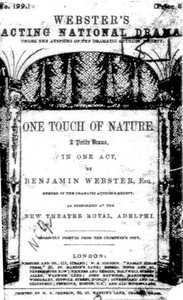
Click "Read now" to open in our Reader with AI features.
Community Discussions
Join the conversation about this book
Discussions
0 discussions
No discussions yet
Be the first to start a discussion about this book!
Sign up to start the discussionAI-Powered Insights
Intelligent analysis and summaries
Benjamin Webster's "One Touch of Nature: A Petite Drama, in One Act" is a poignant late 19th-century play exploring the profound bonds of family, particularly between a father and daughter, set against a lively theatrical backdrop. The drama unfolds as barrister and dramatic author Mr. Beaumont Fletcher navigates production challenges with actress Miss Constance Belmour, unaware of the hidden connection between Constance and the copyist, Mr. William Penn Holder. Holder, burdened by a tragic past, has secretly sought his daughter for years, only to find her unknowingly working alongside him. A seemingly trivial misunderstanding involving a bouquet acts as a catalyst, leading to humorous yet emotionally charged interactions that ultimately pave the way for a deeply moving father-daughter reunion, underscoring the universal truth that "one touch of nature makes the whole world kin."
Key Themes
Familial Love and Reunion
This is the central, most powerful theme of the play. It explores the innate, unbreakable bond between a parent and child, suggesting that true family connections transcend separation, time, and circumstance. The play highlights the profound longing for reunion and the emotional fulfillment when such a bond is restored, emphasizing that blood ties are a fundamental part of human identity and happiness.
Miscommunication and Dramatic Irony
The play masterfully uses miscommunication as a primary plot device. Initial interactions are fueled by characters misunderstanding each other's intentions or identities, particularly concerning the bouquet. This creates dramatic irony, where the audience is privy to Holder's secret while the characters on stage are not, building tension and anticipation for the inevitable revelation. It highlights how easily assumptions and lack of context can lead to humorous or poignant errors in human interaction.
Unlock full AI analysis for “One Touch of Nature: A Petite Drama, in One Act”
Chapter breakdowns, character deep-dives, and thematic analysis — all in one place.
Reader Reviews
See what others are saying
Reviews
Overall Rating
Based on community ratings
No reviews yet
Be the first to review this book!
Readers Also Enjoyed
Discover more books similar to One Touch of Nature: A Petite Drama, in One Act