
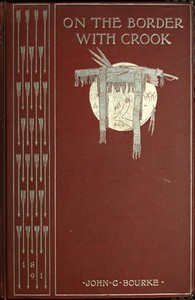
On the Border with Crook
Written by John Gregory Bourke
Chaptra reads alongside you — AI insights, chapter breakdowns and reader discussions for every book. Join free
About this book
Reading guide
Themes, characters and key ideas in On the Border with Crook, written by Chaptra AI.
- about 25 hours
- advanced
- historical
- observational
- somber
John Gregory Bourke's "On the Border with Crook" is a seminal firsthand account of military life during the American Indian Wars, primarily focusing on his service as aide-de-camp to General George Crook in the American Southwest and Great Plains. The memoir meticulously chronicles the campaigns against various Native American tribes, including the Apache, Sioux, and Cheyenne, from the 1870s to the 1880s. Bourke provides a detailed and often ethnographic record of the frontier environment, military strategies, and the complex interactions between the U.S. Army, Native Americans, and white settlers. While written from a military perspective, the book is notable for Bourke's keen observational skills and his relatively nuanced, though still Eurocentric, portrayal of indigenous cultures and the harsh realities of frontier expansion.
“"The American Indian, at the time of the discovery of this continent, was a savage; he is a savage today, and will remain a savage until he is civilized."”
Key themes
- Clash of Cultures
- The book vividly portrays the irreconcilable differences and violent encounters between the expanding Euro-American civilization and the indigenous Native American societies. It explores the conflict arising from differing land uses, spiritual beliefs, social structures, and understandings of peace and war.
- Military Duty and Ethics
- Bourke explores the complex moral landscape of military service during a period of intense conflict. He details the dedication and hardship of soldiers, the strategic decisions of commanders, and the ethical dilemmas faced when engaging with Native American populations, often caught between government policy, public opinion, and personal conscience.
- Observation and Documentation
- A core aspect of Bourke's work is his meticulous and scholarly approach to observing and documenting everything around him – military life, landscapes, and especially Native American cultures. This theme highlights the power of detailed record-keeping as a historical and anthropological tool, even when filtered through a specific cultural lens.
Worth discussing
How does Bourke's perspective as a military officer shape his observations of Native American cultures, and where does he transcend or reinforce the biases of his time?
Chapter-by-chapter breakdowns, character arcs and the full thematic analysis come with a free account.
Discussions
No one has started one yet
Questions this book opens up
No discussions yet
Be the first to start a discussion about this book!
Sign up to start the discussionReviews
No reviews yet
Be the first to review this book!