
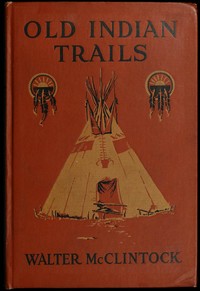
Old Indian trails
Written by Walter McClintock
Chaptra reads alongside you — AI insights, chapter breakdowns and reader discussions for every book. Join free
About this book
Reading guide
Themes, characters and key ideas in Old Indian trails, written by Chaptra AI.
- about 8 hours
- intermediate
- Exploratory
- Observational
- Reflective
Walter McClintock's "Old Indian Trails" is an early 20th-century historical account documenting his immersive experiences with the Blackfoot Indians in northwestern Montana. Beginning in 1896 as part of a government expedition, McClintock, guided by Siksikaí-koan, gradually integrates into Blackfoot culture over many years, meticulously recording their customs, legends, and daily life. The book provides a unique, first-person perspective on a Native American tribe at a pivotal moment, exploring the beauty of their traditions against the backdrop of encroaching modernization. It serves as a valuable ethnographic record, offering insights into the challenges and adaptations faced by the Blackfoot people during a transformative era. The narrative captures the author's profound appreciation for nature and his deep connection with his Blackfoot mentors and friends.
“"The wilderness called to me, a yearning for a life unburdened by the city's ceaseless demands."”
Key themes
- Cultural Preservation and Ethnographic Study
- The central theme of the book is the meticulous documentation and preservation of Blackfoot culture, customs, legends, and daily life. McClintock's long-term immersion serves as an ethnographic study, aiming to record a way of life that was rapidly changing due to external pressures.
- Impact of Modernization and Colonialism
- The book vividly portrays the significant changes and challenges faced by the Blackfoot tribe due to the encroachment of Western civilization, including land loss, economic shifts, and the pressure to assimilate. It explores the disruption of traditional lifestyles and the resilience required to adapt.
- Nature vs. Civilization
- This theme explores the author's personal 'yearning for a life in nature' away from urban constraints, contrasting it with the Blackfoot's inherent, spiritual connection to their wilderness home. It questions the values of 'civilized' society against the perceived purity and wisdom of the natural world and Indigenous living.
Worth discussing
How does McClintock's perspective as an 'outsider' shape his understanding and portrayal of Blackfoot culture? What are the strengths and limitations of such an approach?
Chapter-by-chapter breakdowns, character arcs and the full thematic analysis come with a free account.
Discussions
No one has started one yet
Questions this book opens up
No discussions yet
Be the first to start a discussion about this book!
Sign up to start the discussionReviews
No reviews yet
Be the first to review this book!