
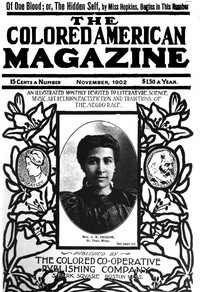
Of one blood: or, The hidden self
Written by Pauline E. (Pauline Elizabeth) Hopkins
Chaptra reads alongside you — AI insights, chapter breakdowns and reader discussions for every book. Join free
About this book
Read it with a club
Chaptra's fiction clubs — small groups reading the same books and talking as they go.


CraxMe Readers Book Club
Fiction
- 385 members
- 227 discussions
- Started December 2025
Welcome to the Readers Book Club. This is an informal group for like-minded people, where you can discuss books, share and recommend, track your reading progress, and lots more. Discuss Books — all about books. Discuss a particular book or genre, share your favourite quotes. Book Reviews — loved a book and highly recommend it? Or was it just average? Share your review and discuss with fellow readers. (May contain spoilers.) Group Reads — what is a book club without a group read! Buddy Reads — planning to read a book and looking for someone to read it with? Post in the Buddy Read request thread, find a reading buddy, and start discussing.
Read Of one blood: or, The hidden self alongside people who are reading it too.
Also here: Doorstops, First Lines Club
Chaptra Prime — paid clubs, every club feature, and unlimited reading support, for $5 a month or $60 once.
See PrimeReading guide
Themes, characters and key ideas in Of one blood: or, The hidden self, written by Chaptra AI.
- about 8 hours
- advanced
- mysterious
- romantic
- introspective
Pauline E. Hopkins's 'Of One Blood: or, The Hidden Self' is a pioneering work of Black speculative fiction that intertwines themes of racial identity, psychological mystery, and ancient African spirituality. The novel follows Reuel Briggs, a talented but impoverished African American medical student, whose life becomes inextricably linked with Dianthe Lusk, a gifted singer with a mysterious past. Their journey leads them from Boston to the ancient ruins of Meroe in Africa, where they uncover startling truths about their shared heritage and the concept of the 'hidden self.' Hopkins explores the complexities of race, identity, and fate, challenging prevailing notions of racial purity and celebrating a glorious African past.
“"Of one blood have I made all nations of men for to dwell on all the face of the earth."”
Key themes
- Race and Identity
- The novel profoundly explores the complexities of African American identity in post-Civil War America, challenging rigid racial classifications through the concept of miscegenation and the reclamation of a glorious African past. It questions what constitutes 'Blackness' and 'whiteness' and the societal implications of racial mixing.
- The Hidden Self / Psychology
- Hopkins delves into the subconscious mind, inherited memory, spiritualism, and telepathy, using the 'hidden self' as a metaphor for both individual psychological depth and the suppressed historical and cultural memory of African Americans. It explores the idea that past experiences and ancestral knowledge can influence present actions and identities.
- Fate vs. Free Will
- The narrative strongly suggests a predetermined destiny for Reuel and Dianthe, whose lives are intertwined by ancient forces and prophecies. While characters make choices, many events seem guided by an inescapable fate, particularly their tragic connection and the revelations of their heritage.
Worth discussing
How does Hopkins use the concept of the 'hidden self' to explore both individual psychology and collective racial identity?
Chapter-by-chapter breakdowns, character arcs and the full thematic analysis come with a free account.
Discussions
No one has started one yet
Questions this book opens up
No discussions yet
Be the first to start a discussion about this book!
Sign up to start the discussionReviews
No reviews yet
Be the first to review this book!