
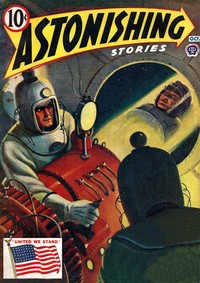
Nothing
Written by Donald A. Wollheim
Chaptra reads alongside you — AI insights, chapter breakdowns and reader discussions for every book. Join free
About this book
Read it with a club
Chaptra's fiction clubs — small groups reading the same books and talking as they go.


CraxMe Readers Book Club
Fiction
- 385 members
- 227 discussions
- Started December 2025
Welcome to the Readers Book Club. This is an informal group for like-minded people, where you can discuss books, share and recommend, track your reading progress, and lots more. Discuss Books — all about books. Discuss a particular book or genre, share your favourite quotes. Book Reviews — loved a book and highly recommend it? Or was it just average? Share your review and discuss with fellow readers. (May contain spoilers.) Group Reads — what is a book club without a group read! Buddy Reads — planning to read a book and looking for someone to read it with? Post in the Buddy Read request thread, find a reading buddy, and start discussing.
Read Nothing alongside people who are reading it too.
Also here: Doorstops, First Lines Club
Chaptra Prime — paid clubs, every club feature, and unlimited reading support, for $5 a month or $60 once.
See PrimeReading guide
Themes, characters and key ideas in Nothing, written by Chaptra AI.
- about 8 hours
- intermediate
- philosophical
- suspenseful
- existential
Donald A. Wollheim's short story "Nothing" plunges readers into a harrowing post-bombing scenario where a young man and an old professor are trapped beneath rubble. The narrative unfolds as the professor, a physicist, proposes a radical theory: that matter is merely energy, and by intensely visualizing themselves and the obstacles as 'nothing,' they can transcend physical barriers. Through a hypnotic journey guided by the professor, the young protagonist experiences a surreal transformation, seemingly passing through solid rock to freedom. However, the story concludes with a stark return to reality, as the professor is found deceased, leaving the protagonist and the reader to grapple with profound questions about the nature of existence, perception, and the ultimate limits of human understanding.
“All matter is merely energy in a static state, David. Visualize nothingness, and nothingness it shall be.”
Key themes
- Existence and Reality
- The central theme, exploring whether reality is an objective, immutable truth or a subjective construct influenced by perception and consciousness. The professor's theory directly challenges the physical solidity of the world.
- Perception vs. Objective Reality
- This theme examines the power of the mind to influence or even create reality, questioning the distinction between what we perceive and what truly exists. It delves into how extreme mental states might unlock new ways of interacting with the physical world.
- The Limits of Science and Human Understanding
- The story probes the boundaries of scientific knowledge and human comprehension. The professor's theory pushes beyond conventional physics, suggesting that there are truths about the universe that remain undiscovered or are too radical for common acceptance. The professor's death also serves as a poignant reminder that even profound understanding doesn't guarantee mastery over reality.
Worth discussing
How does 'Nothing' challenge our conventional understanding of reality and the physical world?
Chapter-by-chapter breakdowns, character arcs and the full thematic analysis come with a free account.
Discussions
No one has started one yet
Questions this book opens up
No discussions yet
Be the first to start a discussion about this book!
Sign up to start the discussionReviews
No reviews yet
Be the first to review this book!