
Not in the Script
Written by Arnold Marmor
Chaptra reads alongside you — AI insights, chapter breakdowns and reader discussions for every book. Join free
About this book
Reading guide
Themes, characters and key ideas in Not in the Script, written by Chaptra AI.
- about 8 hours
- intermediate
- tense
- deceptive
- thought-provoking
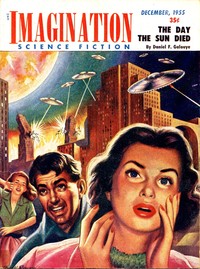
Arnold Marmor's mid-20th century science fiction novella, "Not in the Script," plunges into a high-stakes Cold War scenario where Earth faces an impending Martian invasion. To avert disaster, playwright Jules Barnes is tasked with an extraordinary mission: to craft and direct a grand theatrical deception, making Earth appear technologically primitive and harmless to visiting Martians. As Barnes orchestrates this elaborate 'play' with global collaboration, he grapples with the immense pressure and the ethical weight of his actions. The story culminates in the Martians' peaceful departure, only for Barnes to discover the military's true, morally ambiguous intent: to use the illusion as a prelude to their own counter-offensive against Mars, leaving him to confront the profound implications of engineered conflict.
“We are not merely writing a play, Mr. Barnes; we are writing Earth's survival.”
Key themes
- Deception and Illusion
- The central theme, exploring how fabricated narratives and performances can be used to manipulate perceptions and achieve strategic goals. It delves into the ethics of such deception, particularly when the stakes are planetary survival, and the psychological toll it takes on those involved in perpetuating the lie.
- Moral Ambiguity of Warfare and Politics
- This theme questions the traditional black-and-white distinctions between good and evil in conflict. It explores whether actions, even those intended for defense, can be justified if they rely on profound deceit and ultimately lead to further aggression. Barnes's internal struggle and Shratt's final revelation are key to this theme.
- Cold War Paranoia and Xenophobia
- Set during the mid-20th century, the novella reflects the pervasive fear of external threats and the 'other' prevalent during the Cold War. The Martians represent an unknown, technologically superior adversary, mirroring the era's anxieties about nuclear conflict and ideological enemies, driving Earth's extreme measures.
Worth discussing
Discuss the ethical implications of Earth's deception. Was it justified, even with the military's ulterior motives?
Chapter-by-chapter breakdowns, character arcs and the full thematic analysis come with a free account.
Discussions
No one has started one yet
Questions this book opens up
No discussions yet
Be the first to start a discussion about this book!
Sign up to start the discussionReviews
No reviews yet
Be the first to review this book!