
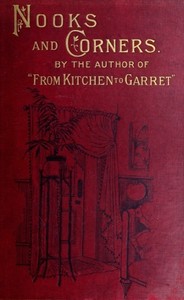
Nooks and Corners: being the companion volume to 'From Kitchen to Garret'
Written by J. E. (Jane Ellen) Panton
Chaptra reads alongside you — AI insights, chapter breakdowns and reader discussions for every book. Join free
About this book
Reading guide
Themes, characters and key ideas in Nooks and Corners: being the companion volume to 'From Kitchen to Garret', written by Chaptra AI.
- about 8 hours
- intermediate
- instructive
- nostalgic
- practical
J. E. Panton's "Nooks and Corners" is a late 19th-century guidebook offering comprehensive advice on household management and home decoration, positioned as a companion to "From Kitchen to Garret." The book navigates the complexities of transforming a new, often larger, house into a personalized home, using the hypothetical journey of a couple, Edwin and Angelina, as a narrative thread. Panton blends practical instruction on everything from selecting a home and managing possessions during a move to detailed room-by-room decoration, with empathetic reflections on the emotional weight of relocation and the psychological impact of one's environment. Emphasizing the importance of retaining personal style and community connections, the text provides a warm and relatable framework for readers seeking to cultivate comfort, beauty, and efficiency in their domestic lives.
“A house becomes a home not merely by the turning of a key, but by the careful cultivation of comfort and character within its walls.”
Key themes
- The Art and Science of Home-making
- Panton elevates household management and decoration from simple chores to a sophisticated discipline, requiring both aesthetic sensibility ('art') and practical knowledge ('science'). The book meticulously covers principles of design, organization, and maintenance, emphasizing that a well-managed and beautifully appointed home is a reflection of the mistress's intellect, taste, and dedication. It encompasses everything from architectural considerations and color theory to efficient cleaning routines, presenting home-making as a skilled profession.
- Psychological Impact of Environment
- Panton frequently explores how the physical surroundings of a home profoundly influence the mood, well-being, and even character of its inhabitants. She emphasizes the importance of creating spaces that foster comfort, tranquility, and joy, and warns against environments that are chaotic, uninviting, or overly ostentatious. This theme is introduced early with her reflections on the emotional weight of moving and continues through detailed advice on how specific design choices can shape emotional responses.
- The Victorian Ideal of Domesticity
- The book serves as a vivid articulation of late 19th-century ideals regarding the home as a sanctuary, a place of moral uplift, and the primary domain of women. It meticulously outlines the expectations for a 'good mistress' – one who is capable, tasteful, efficient, and dedicated to creating a comfortable and respectable environment for her family. This theme implicitly addresses the rising middle class's aspirations for social status, refinement, and the construction of a private sphere that contrasted with the public world of work and industry.
Worth discussing
How does Panton's approach to home-making reflect the social and economic conditions of late 19th-century England?
Chapter-by-chapter breakdowns, character arcs and the full thematic analysis come with a free account.
Discussions
No one has started one yet
Questions this book opens up
No discussions yet
Be the first to start a discussion about this book!
Sign up to start the discussionReviews
No reviews yet
Be the first to review this book!