
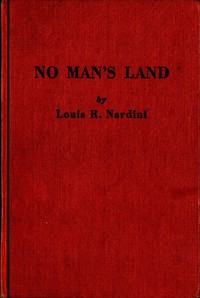
No Man's Land: A History of El Camino Real
Written by Louis Raphael Nardini
Chaptra reads alongside you — AI insights, chapter breakdowns and reader discussions for every book. Join free
About this book
Reading guide
Themes, characters and key ideas in No Man's Land: A History of El Camino Real, written by Chaptra AI.
- about 8 hours
- intermediate
- Historical
- Informative
- Exploratory
Louis Raphael Nardini's "No Man's Land: A History of El Camino Real" offers a rich historical exploration of the vital trade route connecting Mexico to Natchitoches, Louisiana, in the early 1960s. The book intricately traces El Camino Real's evolution from ancient buffalo trails into a central conduit for cultural exchange and commerce in the southeastern United States. Nardini distinguishes his historical approach by integrating factual accounts with the legends and lived experiences of the period, providing a multifaceted view of the interactions between indigenous tribes, Spanish settlers, and French traders. It highlights the significant role of the Caddo Nation and individual figures like Dachicoin of the Adais tribe, painting a vivid picture of the socio-political landscape and the complex dynamics that shaped this legendary path.
“"True history, I believe, must not only chronicle the facts but also echo the legends and experiences of those whose lives shaped its course."”
Key themes
- Cultural Interplay and Exchange
- This is a central theme, focusing on the dynamic interactions between the diverse groups (indigenous tribes like the Caddo and Adais, Spanish settlers, and French traders) along El Camino Real. It explores how these cultures influenced each other through trade, diplomacy, conflict, and daily life, leading to a unique blended regional identity.
- Historical Methodology and Interpretation
- Nardini explicitly introduces his preferred method of history writing: combining empirical facts with the legends and lived experiences of the people. This theme explores the nature of historical truth, the role of oral tradition, and the historian's responsibility in reconstructing the past, moving beyond mere chronology to capture the human element.
- The Significance of Trade Routes
- The book meticulously details how El Camino Real transcended its physical form to become a geopolitical and economic artery. It explores how the route dictated settlement patterns, facilitated economic growth, spurred competition between colonial powers, and was vital for communication and military movements, fundamentally shaping the region's development.
Worth discussing
How does Nardini's chosen historical methodology (combining facts with legends) impact your understanding and appreciation of the past?
Chapter-by-chapter breakdowns, character arcs and the full thematic analysis come with a free account.
Discussions
No one has started one yet
Questions this book opens up
No discussions yet
Be the first to start a discussion about this book!
Sign up to start the discussionReviews
No reviews yet
Be the first to review this book!