
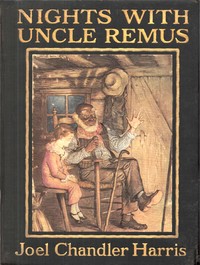
Nights With Uncle Remus
Written by Joel Chandler Harris
Chaptra reads alongside you — AI insights, chapter breakdowns and reader discussions for every book. Join free
About this book
Reading guide
Themes, characters and key ideas in Nights With Uncle Remus, written by Chaptra AI.
- about 8 hours
- intermediate
- humorous
- folksy
- didactic
Joel Chandler Harris's "Nights With Uncle Remus" is a seminal collection of African-American folk tales, presented through the endearing character of Uncle Remus, an elderly former slave who shares whimsical stories with a young white boy. Set primarily in Uncle Remus's cabin, the book features a vibrant cast of anthropomorphic animals, most notably the cunning Brer Rabbit and his frequent adversary, Brer Fox, whose interactions often highlight themes of wit, survival, and social commentary. Written in a distinctive, phonetic dialect, the collection aims to preserve and popularize a rich oral tradition, blending humor, moral lessons, and shrewd observations on human nature. Despite its historical significance in American literature, the work remains a complex text, celebrated for its storytelling while also scrutinized for its controversial racial representations and use of dialect.
“"Bred en bawn in a brier-patch, Brer Fox – bred en bawn in a brier-patch!"”
Key themes
- Tricksterism and Survival
- This theme explores how the physically weaker Brer Rabbit consistently outsmarts his larger, more powerful adversaries through cunning, wit, and psychological manipulation. It reflects a strategy for survival and resistance against oppression, where intelligence and ingenuity overcome brute force.
- Folklore and Oral Tradition
- The book itself is an act of preserving African-American oral traditions, showcasing the rich narrative heritage passed down through generations. The framing device of Uncle Remus telling stories to the Little Boy emphasizes the importance of storytelling as a means of education, entertainment, and cultural transmission.
- Racial Representation and Stereotypes
- This is a highly controversial and critical theme. The book, while preserving folklore, is also seen as perpetuating racial stereotypes through its portrayal of Uncle Remus as a 'happy darky' figure and its use of a phonetic dialect that was often associated with minstrelsy.
Worth discussing
How does Harris's use of dialect contribute to or detract from the authenticity and accessibility of the stories?
Chapter-by-chapter breakdowns, character arcs and the full thematic analysis come with a free account.
Discussions
No one has started one yet
Questions this book opens up
No discussions yet
Be the first to start a discussion about this book!
Sign up to start the discussionReviews
No reviews yet
Be the first to review this book!