
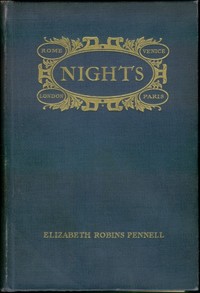
Nights: Rome, Venice, in the Aesthetic Eighties; London, Paris, in the Fighting Nineties
Written by Elizabeth Robins Pennell
Chaptra reads alongside you — AI insights, chapter breakdowns and reader discussions for every book. Join free
About this book
Reading guide
Themes, characters and key ideas in Nights: Rome, Venice, in the Aesthetic Eighties; London, Paris, in the Fighting Nineties, written by Chaptra AI.
- about 10 hours
- intermediate
- nostalgic
- reflective
- bohemian
Elizabeth Robins Pennell's "Nights" is a captivating memoir chronicling her adventures and artistic life across Europe in the late 19th century. The book vividly portrays her early struggles and bohemian experiences with her husband, J., in Rome and Venice during the 'Aesthetic Eighties,' highlighting their determination amidst limited means. It then shifts to their later, more established life in London and Paris amidst the 'Fighting Nineties,' capturing the vibrant cultural shifts and intellectual ferment of the fin-de-siècle. Pennell skillfully weaves together personal anecdotes, encounters with notable figures, and keen observations on the evolving art scenes, creating a rich tapestry of a bygone era. The memoir ultimately reflects on the universality of human experience through the lens of artistic ambition and the passage of time.
“Rome, in those early days, was less a city of monuments and more a stage for our youthful follies and fervent artistic dreams.”
Key themes
- The Artistic Life and Creative Struggle
- This theme explores the challenges, joys, and dedication inherent in pursuing an artistic career, particularly for expatriate artists with limited means. Pennell details the financial struggles, the search for inspiration, the camaraderie among artists, and the unwavering commitment required to create art.
- Travel and Cultural Exploration
- The memoir is fundamentally a travelogue, celebrating the transformative power of experiencing different cultures and landscapes. It highlights the wonder, occasional disorientation, and profound personal growth that comes from immersing oneself in new environments.
- Cultural Change and the Fin-de-Siècle
- The book vividly captures the transition between two distinct cultural decades – the 'Aesthetic Eighties' and the 'Fighting Nineties.' It explores the shift from a focus on beauty and art for art's sake to a more socially conscious, politically charged, and experimental atmosphere that characterized the end of the 19th century.
Worth discussing
How does Pennell's portrayal of the 'Aesthetic Eighties' differ from her depiction of the 'Fighting Nineties'? What cultural shifts are most apparent?
Chapter-by-chapter breakdowns, character arcs and the full thematic analysis come with a free account.
Discussions
No one has started one yet
Questions this book opens up
No discussions yet
Be the first to start a discussion about this book!
Sign up to start the discussionReviews
No reviews yet
Be the first to review this book!