
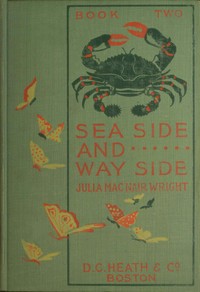
Nature readers : $b Seaside and wayside No. 2
Written by Julia McNair Wright
Chaptra reads alongside you — AI insights, chapter breakdowns and reader discussions for every book. Join free
About this book
Read it with a club
Small groups reading the same books and talking as they go.


News
- 4 members
- 1,813 discussions
- Active Sep 11
Read Nature readers : $b Seaside and wayside No. 2 alongside people who are reading it too.
Also here: News Bulletin, Just Joking....
Chaptra Prime — paid clubs, every club feature, and unlimited reading support, for $5 a month or $60 once.
See PrimeReading guide
Themes, characters and key ideas in Nature readers : $b Seaside and wayside No. 2, written by Chaptra AI.
- about 7 hours
- beginner
- educational
- curious
- appreciative
Julia McNair Wright's "Nature Readers: Seaside and Wayside No. 2" is a late 19th-century educational collection designed to introduce children to the wonders of the natural world. Focusing on environments like the seaside and pathways, the book meticulously details the lives of common creatures such as ants, flies, earthworms, and beetles. Wright employs engaging language and vivid descriptions to foster curiosity and appreciation, encouraging young readers to observe nature directly. It emphasizes the beauty and wisdom found even in humble creatures, promoting an interactive and insightful approach to nature study. The text serves as a guided tour, inviting children to open their minds and eyes to the intricate details of their surroundings.
“Come with me, little wanderers, to breezy hills and sandy shores, and let us keep our minds and eyes open to the beauty and wisdom of nature.”
Key themes
- Nature Observation and Appreciation
- This is the core theme, emphasizing the importance of direct engagement with the natural world through careful observation. The book aims to cultivate a deep sense of wonder and respect for all living things, from the grand landscapes to the smallest insects.
- Education Through Direct Experience
- A foundational pedagogical principle of the book, advocating for learning by doing and seeing, rather than rote memorization. The author consistently invites the reader to engage directly with the environment, making the 'classroom' nature itself.
- The Industriousness and Social Structure of Nature
- The book highlights the cooperative, hardworking, and organized aspects of various creatures, particularly ants. These natural behaviors are presented as models of efficiency, community, and purpose, often with implicit moral lessons.
Worth discussing
How has the approach to nature education for children changed since the late 19th century?
Chapter-by-chapter breakdowns, character arcs and the full thematic analysis come with a free account.
Discussions
No one has started one yet
Questions this book opens up
No discussions yet
Be the first to start a discussion about this book!
Sign up to start the discussionReviews
No reviews yet
Be the first to review this book!