
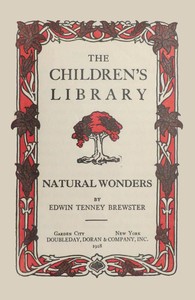
Natural Wonders
Written by Edwin Tenney Brewster
Chaptra reads alongside you — AI insights, chapter breakdowns and reader discussions for every book. Join free
About this book
Reading guide
Themes, characters and key ideas in Natural Wonders, written by Chaptra AI.
- about 8 hours
- beginner
- Educational
- Curious
- Inspiring
Edwin Tenney Brewster's "Natural Wonders" is an early 20th-century children's educational book designed to introduce young readers to the marvels of natural science. The work primarily focuses on fundamental biological concepts, such as animal and plant life cycles, presented through accessible and engaging explanations. Beginning with the detailed process of a chicken hatching from an egg, Brewster cultivates a sense of wonder and encourages curiosity about the natural world. The book aims to build a foundational understanding of how living beings grow and develop, fostering an appreciation for life's continuity and diversity. Its pedagogical approach emphasizes direct observation and clear, simple language to make complex scientific ideas relatable for its young audience.
“Observe closely, and you shall see the grand design of nature unfold before your very eyes.”
Key themes
- The Wonders of Nature
- This is the overarching theme, as the book's primary goal is to instill a sense of awe and appreciation for the natural world. It highlights the intricate beauty and complexity of biological processes, from the smallest organism to vast ecosystems, presented as constant sources of fascination and discovery.
- Life Cycles and Continuity
- A fundamental biological theme exploring the cyclical nature of life, death, and renewal across species. The book illustrates how all living things follow predictable patterns of growth, reproduction, and development, emphasizing the interconnectedness and resilience of life on Earth.
- Scientific Observation and Curiosity
- Brewster actively encourages young readers to engage with the world through careful observation and an inquisitive mind. The book models scientific inquiry by presenting detailed observations and then inviting the reader to ask 'how' and 'why,' fostering a scientific temperament from an early age.
Worth discussing
How does Brewster use the example of the hatching chick to introduce broader scientific concepts effectively?
Chapter-by-chapter breakdowns, character arcs and the full thematic analysis come with a free account.
Discussions
No one has started one yet
Questions this book opens up
No discussions yet
Be the first to start a discussion about this book!
Sign up to start the discussionReviews
No reviews yet
Be the first to review this book!