
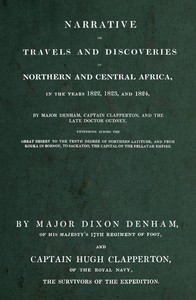
Narrative of travels and discoveries in Northern and Central Africa, in the years 1822, 1823, and 1824
Written by Hugh Clapperton,Dixon Denham,Walter Oudney
Chaptra reads alongside you — AI insights, chapter breakdowns and reader discussions for every book. Join free
About this book
Reading guide
Themes, characters and key ideas in Narrative of travels and discoveries in Northern and Central Africa, in the years 1822, 1823, and 1824, written by Chaptra AI.
- about 8 hours
- advanced
- adventurous
- arduous
- observational
Hugh Clapperton, Dixon Denham, and Walter Oudney's "Narrative of Travels and Discoveries in Northern and Central Africa" chronicles a pivotal early 19th-century British expedition into the African interior. The account details their arduous journey from Tripoli, through the Sahara, and into the kingdoms of Bornu and Sokoto, offering a firsthand look at vast landscapes, diverse indigenous cultures, and the immense challenges of exploration. It serves as a vital historical document, mapping previously unknown territories and documenting the societies encountered, while also reflecting the prevailing European perspectives of the era. The narrative balances meticulous geographical and ethnographic observations with personal accounts of hardship, disease, and political maneuvering, culminating in both scientific discovery and personal tragedy.
“The desert, with its monotonous expanse, presented a scene of desolation that few can imagine, yet it possessed a terrible grandeur.”
Key themes
- Exploration and Discovery
- This is the central driving force of the narrative. The book details the arduous process of charting unknown territories, encountering previously undocumented peoples, and gathering scientific data. It embodies the 19th-century European zeal for expanding geographical knowledge and asserting presence in uncharted lands.
- Endurance and Survival
- The physical and mental toll of the expedition is a pervasive theme. The explorers face extreme environmental conditions (desert heat, lack of water), disease (malaria, dysentery), and constant threats from hostile groups or logistical failures. Their ability to persevere against these odds is central to the story.
- Cultural Encounter and Misunderstanding
- The narrative is replete with detailed accounts of interactions between the European explorers and various African tribes and kingdoms. These encounters are often characterized by curiosity, hospitality, trade, but also by suspicion, fear, and profound cultural misunderstandings regarding customs, religion, and power dynamics.
Worth discussing
How does the narrative reflect the scientific and imperial ambitions of early 19th-century Britain?
Chapter-by-chapter breakdowns, character arcs and the full thematic analysis come with a free account.
Discussions
No one has started one yet
Questions this book opens up
No discussions yet
Be the first to start a discussion about this book!
Sign up to start the discussionReviews
No reviews yet
Be the first to review this book!