
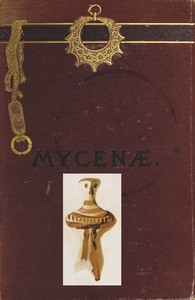
Mycenæ: a narrative of researches and discoveries at Mycenæ and Tiryns
Written by Heinrich Schliemann
Chaptra reads alongside you — AI insights, chapter breakdowns and reader discussions for every book. Join free
About this book
Reading guide
Themes, characters and key ideas in Mycenæ: a narrative of researches and discoveries at Mycenæ and Tiryns, written by Chaptra AI.
- about 10 hours
- advanced
- Exploratory
- Historical
- Scholarly
Schliemann's "Mycenæ" is a seminal archaeological account documenting his groundbreaking excavations at the ancient sites of Mycenæ and Tiryns in the late 19th century. Driven by an unwavering belief in the historical accuracy of Homeric epics, Schliemann narrates his pursuit to uncover the material reality behind legendary figures and events. The book meticulously details the discoveries of monumental architecture, rich burial sites, and countless artifacts, which Schliemann interprets as direct evidence of a sophisticated Mycenaean civilization linked to the Homeric narratives. It stands as a testament to the revolutionary impact of archaeology in validating ancient myths and re-shaping our understanding of early Greek history, despite the controversial nature of some of Schliemann's methods.
“I resolved to bring to light the Troy of Homer, which had lain for centuries in the dust.”
Key themes
- The Quest for Historical Validation of Myth
- This is the central driving force of Schliemann's work. He explicitly states his motivation to prove the historical reality of Homer's epic poems, specifically the events and figures of the Trojan War and the Mycenaean civilization. The book is a testament to his unwavering belief that archaeology could uncover the truth behind ancient legends.
- Pioneering Archaeology and its Evolution
- The book serves as a primary document illustrating the nascent stages of systematic archaeology in the late 19th century. It showcases both the revolutionary potential of excavation to uncover lost civilizations and the primitive, often destructive, methods employed, which contrast sharply with modern archaeological practices.
- The Construction of Historical Narratives
- Schliemann's work is not merely a report of finds but a deliberate construction of a historical narrative. He weaves together archaeological evidence with classical literature, personal conviction, and vivid descriptions to create a compelling story that reshapes the understanding of ancient Greek history and brings a 'lost' civilization to life.
Worth discussing
Discuss the ethical implications of Schliemann's archaeological methods in comparison to modern standards. How much does intent matter?
Chapter-by-chapter breakdowns, character arcs and the full thematic analysis come with a free account.
Discussions
No one has started one yet
Questions this book opens up
No discussions yet
Be the first to start a discussion about this book!
Sign up to start the discussionReviews
No reviews yet
Be the first to review this book!