
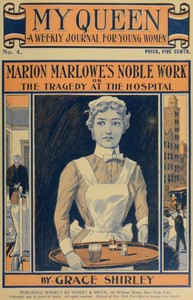
My Queen: A Weekly Journal for Young Women. Issue 4, October 20, 1900: Marion Marlowe's Noble Work; or, The Tragedy at the Hospital
Written by Lurana Sheldon
Chaptra reads alongside you — AI insights, chapter breakdowns and reader discussions for every book. Join free
About this book
Reading guide
Themes, characters and key ideas in My Queen: A Weekly Journal for Young Women. Issue 4, October 20, 1900: Marion Marlowe's Noble Work; or, The Tragedy at the Hospital, written by Chaptra AI.
- about 1 hours
- intermediate
- inspirational
- earnest
- melodramatic
This issue of 'My Queen' journal presents a didactic short story, 'Marion Marlowe's Noble Work; or, The Tragedy at the Hospital,' designed to inspire young women. It likely centers on Marion Marlowe, a virtuous and dedicated young woman, who engages in altruistic work within a hospital setting. The narrative presumably explores her unwavering commitment to service and compassion in the face of a significant tragedy, demonstrating resilience and moral fortitude. The story serves as a moral exemplar, guiding its readership on the virtues of selflessness, duty, and Christian charity in late Victorian/early Edwardian society.
“Specific quotes are unavailable without access to the text. However, typical quotes would likely emphasize duty, compassion, faith, and the rewards of selfless service, such as: 'Even in the darkest hour, true nobility shines brightest.' or 'Her hands, though weary, never faltered in their work of mercy.'”
Key themes
- Noble Work and Service
- This is the central theme, exploring the concept of selfless dedication to others, particularly through charitable or professional service. It emphasizes the moral imperative for young women to contribute positively to society beyond domestic roles, but still within a framework of compassion and care. The story likely defines 'noble work' through Marion's actions, showcasing its inherent value and spiritual rewards.
- Compassion and Empathy
- The story profoundly explores the power of human kindness and the ability to understand and share the feelings of others. Marion's character is a personification of empathy, driving her actions and making her an effective caregiver. The narrative highlights how compassion can alleviate suffering and bring comfort even in the direst circumstances.
- Resilience in Adversity
- The 'tragedy at the hospital' serves as the primary vehicle for exploring this theme. Marion's ability to maintain her composure, dedication, and moral compass amidst chaos, suffering, and potential despair is central. The story teaches that true strength lies not in the absence of hardship, but in the unwavering commitment to one's principles and duties during challenging times.
Worth discussing
How does the story define 'noble work' for young women in 1900, and how might that definition compare to contemporary views?
Chapter-by-chapter breakdowns, character arcs and the full thematic analysis come with a free account.
Discussions
No one has started one yet
Questions this book opens up
No discussions yet
Be the first to start a discussion about this book!
Sign up to start the discussionReviews
No reviews yet
Be the first to review this book!