
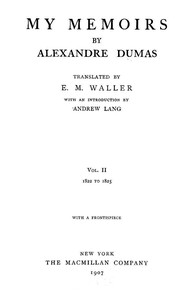
My Memoirs, Vol. II, 1822 to 1825
Written by Alexandre Dumas
Chaptra reads alongside you — AI insights, chapter breakdowns and reader discussions for every book. Join free
About this book
Reading guide
Themes, characters and key ideas in My Memoirs, Vol. II, 1822 to 1825, written by Chaptra AI.
- about 8 hours
- intermediate
- humorous
- nostalgic
- romantic
Alexandre Dumas's "My Memoirs, Vol. II, 1822 to 1825" offers a captivating personal journey through his early adulthood, capturing his experiences from 1822 to 1825. This volume delves into the author's formative years, detailing his romantic pursuits, the dynamics of his relationships with friends and family, and his keen observations of society in his hometown of Villers-Cotterets. Beginning with a humorous and self-deprecating anecdote about his romantic misadventures with Doña Lorenza, overheard in Maître Mennesson's office, the memoir blends introspection with a lively recounting of youthful innocence. It establishes a tone of charming nostalgia and wit, providing a vivid snapshot of early 19th-century provincial life through the eyes of a future literary giant.
“Oh, youth, with its grand illusions and its glorious blunders!”
Key themes
- Youth and Coming-of-Age
- The memoir centrally explores the transition from adolescence to early adulthood, focusing on Dumas's experiences between the ages of 20 and 23. It delves into the formation of identity, the acquisition of life lessons, and the often-tumultuous journey of self-discovery during one's formative years.
- Memory and Nostalgia
- As a memoir, the act of remembering and reflecting on the past is a core theme. Dumas revisits his younger self with a blend of affectionate nostalgia, humor, and critical distance, exploring how past events are shaped and reinterpreted through the lens of experience.
- First Love and Romantic Idealism
- The memoir extensively details Dumas's early romantic pursuits, particularly his infatuation with Doña Lorenza. This theme explores the intensity, often comical missteps, and profound impact of initial romantic experiences and the gap between youthful idealization and reality.
Worth discussing
How does Dumas use humor and self-deprecation to engage the reader in his personal narrative?
Chapter-by-chapter breakdowns, character arcs and the full thematic analysis come with a free account.
Discussions
No one has started one yet
Questions this book opens up
No discussions yet
Be the first to start a discussion about this book!
Sign up to start the discussionReviews
No reviews yet
Be the first to review this book!