
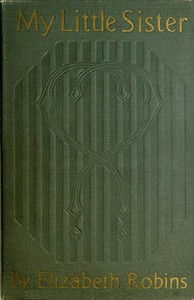
My Little Sister
Written by Elizabeth Robins
Chaptra reads alongside you — AI insights, chapter breakdowns and reader discussions for every book. Join free
About this book
Reading guide
Themes, characters and key ideas in My Little Sister, written by Chaptra AI.
- about 8 hours
- intermediate
- reflective
- melancholy
- protective
Elizabeth Robins' "My Little Sister" delves into the intricate bond between two sisters, focusing on the older sibling's protective instincts towards her charming, ethereal younger sister, Bettina. Set against an idyllic yet isolated childhood, the narrative explores themes of innocence, familial devotion, and the encroaching complexities of adulthood. As the older sister grapples with their mother's anxieties about the outside world, the story unfolds to reveal how societal expectations and the loss of youthful naiveté challenge their sheltered existence, ultimately testing the strength and nature of their sisterly love and the older sister's resolve to shield Bettina from perceived dangers.
“She was a radiant presence, a creature of light and laughter who drew all affection to her as naturally as a flower turns to the sun.”
Key themes
- Innocence vs. Experience
- This central theme explores the transition from a state of childhood purity and naiveté to the complex, often harsh realities of adulthood. It questions the value of preserving innocence and the inevitability of its loss, particularly for women in a society that both idealizes and exploits it. The novel contrasts the sheltered idyll of childhood with the 'specter of adulthood' and the challenges Bettina faces.
- Sisterhood and Familial Bonds
- The novel deeply examines the complex, often intense, bond between sisters, particularly focusing on the older sister's protective love and the younger sister's reliance. It explores the dynamics of loyalty, sacrifice, and the psychological impact of such a relationship, especially when one sister takes on a guardian role, blurring the lines between sibling and parent.
- Societal Expectations and Constraints on Women
- Set in the early 20th century, the novel implicitly critiques the restrictive societal norms and expectations placed upon women, particularly regarding their purity, reputation, and limited agency. The mother's anxieties and the older sister's protective efforts are rooted in the fear of Bettina falling prey to these societal traps or being judged harshly by conventional standards.
Worth discussing
How does the older sister's role as narrator shape our perception of Bettina and the events of the story?
Chapter-by-chapter breakdowns, character arcs and the full thematic analysis come with a free account.
Discussions
No one has started one yet
Questions this book opens up
No discussions yet
Be the first to start a discussion about this book!
Sign up to start the discussionReviews
No reviews yet
Be the first to review this book!