
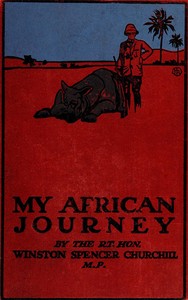
My African Journey
Written by Winston Churchill
Chaptra reads alongside you — AI insights, chapter breakdowns and reader discussions for every book. Join free
About this book
Reading guide
Themes, characters and key ideas in My African Journey, written by Chaptra AI.
- about 8 hours
- intermediate
- Exploratory
- Historical
- Reflective
Winston Churchill's "My African Journey" is a compelling early 20th-century travelogue detailing his 1907 expedition through East Africa as Under-Secretary of State for the Colonies. The book provides a vivid, firsthand account of the diverse landscapes, burgeoning colonial infrastructure, and the challenges and triumphs associated with the British Empire's expansion, particularly focusing on the Uganda Railway. Churchill, serving as both a soldier and a writer, offers keen observations on the region's natural beauty, its wildlife, and the intricate interactions between European colonialists and local populations. Through a blend of descriptive narrative, personal reflection, and political commentary, the work explores themes of progress, empire, and the confrontation between civilization and wilderness. It stands as a significant historical document, revealing the mindset of a future world leader grappling with the complexities of imperial governance and the allure of an untamed continent.
“The plains of Africa, as seen from the railway, have a character all their own.”
Key themes
- Colonialism and Empire
- The central theme, explored through Churchill's observations on British governance, economic development (especially the railway), and the perceived 'civilizing mission' in East Africa. He reflects on the responsibilities and challenges of maintaining and expanding the empire.
- Nature, Wilderness, and Civilization
- Churchill vividly contrasts the untamed African wilderness with the encroaching 'civilization' brought by the British. He expresses both awe for the natural world (landscapes, wildlife) and a belief in the necessity of human mastery over it, as exemplified by hunting and infrastructure projects.
- Progress and Modernity
- The book celebrates the idea of progress, primarily through technological advancement and the spread of British influence. The Uganda Railway is a prime example, seen as transforming the region, fostering commerce, and bringing the benefits of modernity to Africa.
Worth discussing
How does Churchill's portrayal of the 'Uganda Railway' symbolize British imperial ambition and progress?
Chapter-by-chapter breakdowns, character arcs and the full thematic analysis come with a free account.
Discussions
No one has started one yet
Questions this book opens up
No discussions yet
Be the first to start a discussion about this book!
Sign up to start the discussionReviews
No reviews yet
Be the first to review this book!