
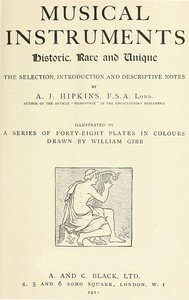
Musical Instruments, Historic, Rare and Unique
Written by Alfred J. (Alfred James) Hipkins
Chaptra reads alongside you — AI insights, chapter breakdowns and reader discussions for every book. Join free
About this book
Reading guide
Themes, characters and key ideas in Musical Instruments, Historic, Rare and Unique, written by Chaptra AI.
- about 15 hours
- advanced
- informative
- scholarly
- detailed
Alfred J. Hipkins' "Musical Instruments, Historic, Rare and Unique" is a seminal work in musicology, offering a meticulously detailed and sumptuously illustrated exploration of various musical instruments across different cultures and historical periods. It serves as both a historical record and an aesthetic appreciation, documenting the evolution, craftsmanship, and cultural significance of instruments from ancient times through the 19th century. The book is distinguished by its scholarly rigor, combining technical descriptions with historical context, making it an invaluable resource for musicians, historians, and instrument makers. Hipkins' work played a crucial role in the preservation and understanding of musical heritage, influencing subsequent generations of researchers and enthusiasts.
“"The history of musical instruments is the history of man's artistic impulses and his ingenuity in giving them utterance."”
Key themes
- The Evolution and Innovation of Musical Instruments
- This theme explores the continuous development and refinement of musical instruments over centuries, driven by both artistic demands and technological advancements. Hipkins meticulously traces the lineage of various instruments, showing how they adapted to changing musical styles, performance venues, and cultural needs.
- The Preservation of Musical Heritage
- Hipkins' work is fundamentally an act of preservation, aiming to document and celebrate instruments that were rare, unique, or at risk of being forgotten. The book highlights the importance of archiving, studying, and appreciating the material culture of music.
- Craftsmanship and Artistic Ingenuity
- The book consistently emphasizes the skill, artistry, and ingenuity of instrument makers. Hipkins not only describes the instruments but also implicitly celebrates the individuals and traditions behind their creation, highlighting the blend of scientific understanding and artistic vision required.
Worth discussing
How does Hipkins' work reflect the prevailing attitudes towards music history and instrument preservation in the late 19th century?
Chapter-by-chapter breakdowns, character arcs and the full thematic analysis come with a free account.
Discussions
No one has started one yet
Questions this book opens up
No discussions yet
Be the first to start a discussion about this book!
Sign up to start the discussionReviews
No reviews yet
Be the first to review this book!