
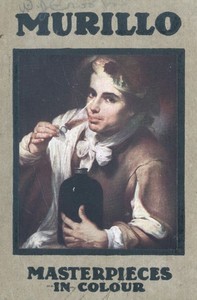
Murillo
Written by S. L. (Samuel Levy) Bensusan
Chaptra reads alongside you — AI insights, chapter breakdowns and reader discussions for every book. Join free
About this book
Read it with a club
Small groups reading the same books and talking as they go.


News
- 4 members
- 1,813 discussions
- Active Sep 11
Read Murillo alongside people who are reading it too.
Also here: News Bulletin, Just Joking....
Chaptra Prime — paid clubs, every club feature, and unlimited reading support, for $5 a month or $60 once.
See PrimeReading guide
Themes, characters and key ideas in Murillo, written by Chaptra AI.
- about 8 hours
- intermediate
- Informative
- Appreciative
- Historical
S. L. Bensusan's 1910 biography, "Murillo," offers a comprehensive look into the life and artistic journey of Bartolomé Esteban Murillo, a pivotal Spanish painter of the 17th century. The book traces Murillo's evolution from a nascent talent to a celebrated master, emphasizing his profound connection to the devout Catholic faith and the vibrant spirit of Andalusia. Bensusan meticulously examines Murillo's stylistic development, particularly in his renowned religious paintings, highlighting his technical skill, creativity, and deeply humanistic approach. Ultimately, the biography positions Murillo as a significant figure whose work not only defined an era but also left an enduring legacy in the annals of art history.
“Murillo, in his profound humanity, painted not merely saints, but the very soul of piety, echoing the devout spirit of his age.”
Key themes
- Faith and Spirituality in Art
- This central theme emphasizes how Murillo's deep Catholic faith was not merely a subject matter but an intrinsic force that shaped his artistic vision and imbued his religious paintings with profound spiritual resonance. Bensusan argues that Murillo's personal piety allowed him to express the sacred with unparalleled authenticity and emotional depth.
- Artistic Evolution and Mastery
- This theme explores Murillo's journey from an apprentice to a celebrated master, detailing the development of his unique style, his technical innovations, and his ability to adapt and refine his artistic expression over time. It encompasses his transition from early naturalism to the more refined and ethereal qualities of his mature religious works.
- Cultural and Historical Context of 17th-Century Spain
- The biography places Murillo firmly within the social, political, and artistic landscape of 17th-century Spain, particularly Seville. It highlights how the Counter-Reformation, the Golden Age of Spanish art, and the unique cultural identity of Andalusia influenced Murillo's subjects, patrons, and stylistic choices.
Worth discussing
How does Bensusan portray Murillo's 'deeply human' aspect, and how does this influence our perception of his religious art?
Chapter-by-chapter breakdowns, character arcs and the full thematic analysis come with a free account.
Discussions
No one has started one yet
Questions this book opens up
No discussions yet
Be the first to start a discussion about this book!
Sign up to start the discussionReviews
No reviews yet
Be the first to review this book!