
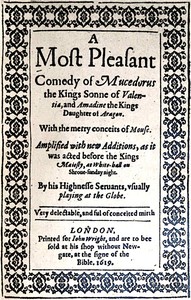
Mucedorus
Written by Shakespeare (spurious and doubtful works)
Chaptra reads alongside you — AI insights, chapter breakdowns and reader discussions for every book. Join free
About this book
Reading guide
Themes, characters and key ideas in Mucedorus, written by Chaptra AI.
- about 8 hours
- intermediate
- romantic
- humorous
- adventurous
Mucedorus is a popular Elizabethan romantic comedy, often attributed to Shakespeare's doubtful works, that encapsulates themes of love, valor, and social hierarchy. The play follows Prince Mucedorus, who, disguised as a shepherd, embarks on an adventurous quest to win the heart of Princess Amadine of Arragon. Their journey is fraught with comedic conflicts and peril, including encounters with wild beasts, a jealous noble suitor, and a 'wild man' named Bremo. Through heroic deeds and the eventual revelation of his true identity, Mucedorus overcomes obstacles and secures Amadine's love, culminating in a festive resolution that celebrates true affection over superficial status.
“Though a shepherd's garb I wear, a prince's heart beats here.”
Key themes
- Love Transcends Social Class
- The central theme of Mucedorus, explored through the prince's disguise as a shepherd. It argues that true love and inherent worth are more important than noble birth or societal status, allowing love to flourish between individuals regardless of their perceived station.
- Appearance vs. Reality
- This theme is manifested through Mucedorus's disguise, which hides his true royal identity but cannot conceal his inherent noble character and valor. The play challenges characters and the audience to look beyond superficial appearances to recognize true worth.
- Heroism and Valor
- Mucedorus is a testament to the importance of courage and heroic action. The protagonist consistently demonstrates valor in saving Amadine from various threats, establishing him as a true hero worthy of respect and love, contrasting with the cowardice of his rival.
Worth discussing
How does 'Mucedorus' explore the theme of appearance versus reality, particularly through the protagonist's disguise?
Chapter-by-chapter breakdowns, character arcs and the full thematic analysis come with a free account.
Discussions
No one has started one yet
Questions this book opens up
No discussions yet
Be the first to start a discussion about this book!
Sign up to start the discussionReviews
No reviews yet
Be the first to review this book!