
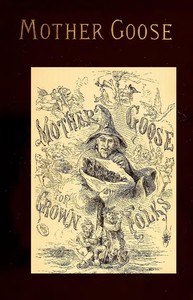
Mother Goose for Grown Folks
Written by A. D. T. (Adeline Dutton Train) Whitney
Chaptra reads alongside you — AI insights, chapter breakdowns and reader discussions for every book. Join free
About this book
Reading guide
Themes, characters and key ideas in Mother Goose for Grown Folks, written by Chaptra AI.
- about 8 hours
- intermediate
- Reflective
- Humorous
- Satirical
A. D. T. Whitney's "Mother Goose for Grown Folks" is a late 19th-century collection that ingeniously reinterprets classic nursery rhymes, transforming their simple narratives into profound moral and philosophical reflections for an adult audience. The book positions Mother Goose herself as an ancient fount of wisdom, whose seemingly childish verses offer deep insights into human nature and societal complexities. Through a blend of humor, satire, and gentle didacticism, Whitney invites readers to revisit familiar tales like Little Boy Blue and Humpty Dumpty, uncovering layers of meaning that speak to adult challenges, follies, and the enduring truths of life. This collection serves as a charming yet thought-provoking exploration of how childhood lessons can illuminate the intricacies of adulthood, bridging the gap between innocent wonder and worldly experience.
“The simple rhyme, once sung with glee, / Now holds a mirror for you and me.”
Key themes
- Wisdom vs. Folly
- This is the central thematic pillar, explored through the contrast between the simple, often naive scenarios of the original rhymes and the complex, sometimes disastrous, outcomes when applied to adult decisions. Whitney consistently highlights how seemingly minor errors in judgment, like Little Boy Blue's sleep or Humpty Dumpty's perch, escalate into significant follies in the adult world, leading to regret, loss, or irreparable damage. The book champions the acquisition of wisdom through reflection on these allegorical tales.
- The Enduring Power of Childhood Lessons
- Whitney argues that the fundamental truths embedded in childhood stories are not outgrown but merely take on deeper, more complex meanings as one ages. The book suggests that the moral framework introduced in early life, through simple narratives, forms the bedrock for understanding and navigating the intricate ethical dilemmas of adulthood. It's a testament to the idea that basic principles of honesty, responsibility, and caution remain universally applicable.
- Social Critique and Satire
- While gentle, the book employs satire to subtly critique Victorian society and universal human failings. By magnifying the seemingly trivial missteps of nursery rhyme characters into significant adult errors, Whitney comments on societal hubris, the consequences of political or personal negligence, and the often-fragile nature of reputation and status. The humor often stems from this ironic juxtaposition of the innocent source material with the serious adult implications.
Worth discussing
How does Whitney's reinterpretation of Mother Goose challenge or reinforce traditional views of childhood innocence and adult responsibility?
Chapter-by-chapter breakdowns, character arcs and the full thematic analysis come with a free account.
Discussions
No one has started one yet
Questions this book opens up
No discussions yet
Be the first to start a discussion about this book!
Sign up to start the discussionReviews
No reviews yet
Be the first to review this book!