
About this book
Reading guide
Themes, characters and key ideas in Mother Earth, Vol. 1 No. 3, May 1906: Monthly Magazine Devoted to Social Science and Literature, written by Chaptra AI.
- about 3 hours
- advanced
- radical
- intellectual
- critical
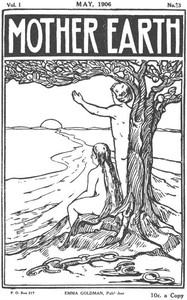
Mother Earth, Vol. 1 No. 3, May 1906, stands as a pivotal artifact of early 20th-century American anarchism, functioning as a monthly magazine devoted to social science and literature. Edited by the formidable Emma Goldman, this issue, like its counterparts, served as a vibrant platform for radical thought, critique of established power structures, and a call for individual and societal liberation. It typically featured essays on political theory, social commentary, poetry, and literary pieces, all imbued with an anti-authoritarian spirit. The magazine aimed to awaken its readership to the injustices of capitalism, state control, and patriarchal norms, advocating for a revolutionary transformation of society towards freedom and equality.
“"True liberty is not found in laws, but in the absence of law."”
Key themes
- Individual Liberty and Autonomy
- Central to anarchist philosophy, this theme explores the paramount importance of individual freedom from all forms of coercion—whether from the state, economic systems, religious dogma, or social conventions. Mother Earth consistently argued that true social progress could only be achieved when individuals were free to think, act, and live without external domination, advocating for self-sovereignty and personal expression.
- Anti-Authoritarianism and Critique of the State
- A foundational theme, Mother Earth consistently denounced all forms of authoritarianism, particularly the state. It argued that governments, regardless of their form, inherently suppress individual liberty and serve the interests of the powerful. The magazine presented the state as an instrument of coercion and violence, advocating for its abolition and replacement with voluntary associations.
- Social Justice and Economic Equality
- Mother Earth vehemently critiqued the injustices inherent in capitalism and the class system. This theme delves into the exploitation of labor, the unequal distribution of wealth, and the systemic poverty engendered by economic hierarchies. The magazine advocated for a society based on mutual aid and voluntary cooperation, free from economic exploitation and class divisions.
Worth discussing
What was the role of radical periodicals like Mother Earth in shaping public opinion and social movements in the early 20th century?
Chapter-by-chapter breakdowns, character arcs and the full thematic analysis come with a free account.
Discussions
No one has started one yet
Questions this book opens up
No discussions yet
Be the first to start a discussion about this book!
Sign up to start the discussionReviews
No reviews yet
Be the first to review this book!