
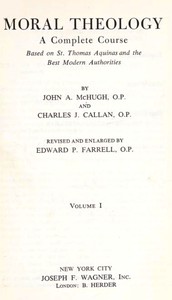
Moral Theology: A Complete Course Based on St. Thomas Aquinas and the Best Modern Authorities
Written by Charles J. (Charles Jerome) Callan,John A. (John Ambrose) McHugh
Chaptra reads alongside you — AI insights, chapter breakdowns and reader discussions for every book. Join free
About this book
Reading guide
Themes, characters and key ideas in Moral Theology: A Complete Course Based on St. Thomas Aquinas and the Best Modern Authorities, written by Chaptra AI.
- about 8 hours
- advanced
- didactic
- authoritative
- analytical
Moral Theology" by McHugh and Callan is a seminal mid-20th century Catholic treatise offering a systematic exploration of human conduct through the lens of reason and revealed truth. Grounded in the teachings of St. Thomas Aquinas and contemporary authorities, it serves as a comprehensive guide to moral principles. The work aims to foster virtuous living beyond mere sin avoidance, providing deep insights into moral dilemmas. It meticulously outlines the importance of moral theology in guiding individuals towards their ultimate end in God, blending theoretical foundations with practical applications for everyday life.
“Moral Theology is not merely a catalogue of prohibitions, but a positive science guiding man toward his ultimate end in God through the embrace of virtue.”
Key themes
- The Ultimate End of Man
- This theme is foundational, asserting that all human acts are ordered towards a final purpose: union with God. The book frames moral theology not as a set of arbitrary rules but as a guide to achieving this ultimate beatitude, making moral decisions meaningful within a teleological framework.
- Natural Law and Reason
- Emphasizes the intrinsic moral order discoverable through human reason, independent of specific divine revelation. Natural law forms a critical basis for understanding universal moral principles and human rights, grounding moral theology in a rational, accessible framework.
- Virtue and Vice
- Explores the cultivation of moral habits (virtues) and the avoidance of immoral ones (vices) as central to moral living. The book goes beyond merely listing sins to promoting a positive development of character, drawing heavily from the cardinal and theological virtues.
Worth discussing
How does "Moral Theology" balance reason and revelation in its approach to human conduct?
Chapter-by-chapter breakdowns, character arcs and the full thematic analysis come with a free account.
Discussions
No one has started one yet
Questions this book opens up
No discussions yet
Be the first to start a discussion about this book!
Sign up to start the discussionReviews
No reviews yet
Be the first to review this book!