
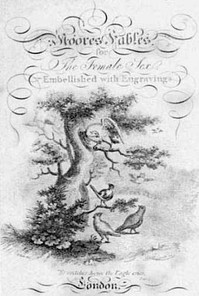
Moores Fables for the Female Sex
Written by Edward Moore
Chaptra reads alongside you — AI insights, chapter breakdowns and reader discussions for every book. Join free
About this book
Reading guide
Themes, characters and key ideas in Moores Fables for the Female Sex, written by Chaptra AI.
- about 8 hours
- intermediate
- Didactic
- Reflective
- Moralistic
Edward Moore's "Moores Fables for the Female Sex" is an early 19th-century collection of allegorical tales specifically crafted to impart moral lessons to women. Through narratives featuring anthropomorphized animals and human characters, the fables explore themes of virtue, beauty, folly, relationships, and societal expectations. Each story serves as a didactic tool, illustrating the complexities of human behavior and guiding female readers towards perceived appropriate conduct and values for their era. The collection opens with "The Eagle and the Assembly of Birds," setting a tone of moral scrutiny and the pursuit of wisdom amidst societal debates, ultimately inviting readers to reflect critically on their own character and the prevailing norms of their time.
“"The truest wisdom lies not in knowing much, but in discerning truth from the whispers of deceit."”
Key themes
- Virtue and Morality
- This is the overarching theme of the entire collection. Moore's fables are explicitly designed to instruct women on various virtues—modesty, prudence, humility, industry, honesty, and piety—and to warn against vices such as vanity, idleness, gossip, and deceit. Each fable serves as a lesson in moral conduct, illustrating the consequences of virtuous and unvirtuous actions.
- Societal Expectations and Gender Roles
- The fables directly address and reinforce the prescribed roles and behaviors for women in Moore's era. They offer guidance on how women should conduct themselves in domestic life, social interactions, and relationships, particularly concerning marriage and reputation. The lessons are tailored to cultivate qualities deemed desirable for wives, mothers, and respectable members of society.
- Folly and Vanity
- A recurring target of Moore's moralizing, folly (lack of good sense) and vanity (excessive pride in one's appearance or abilities) are depicted as dangerous traits, especially for women. The fables frequently illustrate how these characteristics lead to poor judgment, social embarrassment, or personal downfall, often by making characters susceptible to flattery or superficial attractions.
Worth discussing
How do the fables in this collection reflect the societal expectations and roles for women in the early 19th century?
Chapter-by-chapter breakdowns, character arcs and the full thematic analysis come with a free account.
Discussions
No one has started one yet
Questions this book opens up
No discussions yet
Be the first to start a discussion about this book!
Sign up to start the discussionReviews
No reviews yet
Be the first to review this book!