
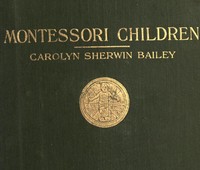
Montessori children
Written by Carolyn Sherwin Bailey
Chaptra reads alongside you — AI insights, chapter breakdowns and reader discussions for every book. Join free
About this book
Reading guide
Themes, characters and key ideas in Montessori children, written by Chaptra AI.
- about 8 hours
- intermediate
- Informative
- Uplifting
- Insightful
Carolyn Sherwin Bailey's "Montessori Children" offers an insightful early 20th-century exploration of Maria Montessori's revolutionary educational philosophy. The book details Bailey's observations of children in Rome, where she witnessed firsthand the transformative effects of self-directed learning and hands-on activities within a carefully prepared environment. Bailey emphasizes that the Montessori method fosters the natural development of a child's personality by prioritizing freedom, innate curiosity, and individual potential over traditional, rigid teaching styles. Through vivid descriptions and an introduction to figures like Maria Montessori and example children such as Margherita, the text champions a child-centered approach that empowers young learners to thrive independently. It serves as both an educational treatise and an impassioned advocacy for a more humane and effective system of child development.
“The child is not an empty vessel to be filled, but a source of power waiting to be unleashed.”
Key themes
- Child-Centered Education
- This is the overarching theme of the book, advocating for an educational system that places the child's individual needs, interests, and developmental stages at its core. It challenges traditional models where the curriculum and teacher are central, instead proposing an environment designed to serve the child's natural learning processes.
- Freedom and Self-Direction
- A fundamental Montessori principle, this theme explores the idea that children learn best when given the freedom to choose their activities, work at their own pace, and correct their own errors. This freedom is not absolute but exists within a carefully prepared and structured environment, fostering discipline and internal motivation.
- Innate Potential and Natural Development
- Bailey underscores Montessori's belief that children possess an inherent drive to learn and develop, a 'horme' or inner teacher. The book argues that education should not impose knowledge but rather facilitate the unfolding of this innate potential by providing the right conditions for natural growth and exploration.
Worth discussing
How does Bailey's account of the Montessori method challenge or affirm your own experiences with traditional education?
Chapter-by-chapter breakdowns, character arcs and the full thematic analysis come with a free account.
Discussions
No one has started one yet
Questions this book opens up
No discussions yet
Be the first to start a discussion about this book!
Sign up to start the discussionReviews
No reviews yet
Be the first to review this book!