
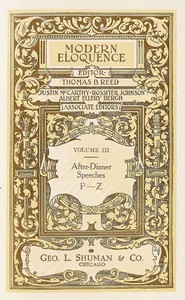
Modern Eloquence: Vol III, After-Dinner Speeches P-Z
Written by Unknown author
Chaptra reads alongside you — AI insights, chapter breakdowns and reader discussions for every book. Join free
About this book
Reading guide
Themes, characters and key ideas in Modern Eloquence: Vol III, After-Dinner Speeches P-Z, written by Chaptra AI.
- about 12 hours
- intermediate
- humorous
- witty
- formal
Modern Eloquence: Vol III, After-Dinner Speeches P-Z is a curated anthology showcasing the art of after-dinner speaking from a bygone era, specifically featuring orators whose last names fall within the P-Z range. This volume serves as both a historical document and a practical guide, preserving the wit, wisdom, and rhetorical techniques employed by prominent figures of the late 19th and early 20th centuries. It offers a fascinating glimpse into the social customs, humor, and intellectual discourse prevalent at formal gatherings, highlighting the role of eloquence in entertainment and informal education.
“"The greatest speech is not the one that is remembered, but the one that makes you forget you're listening to a speech."”
Key themes
- The Art of Eloquence and Rhetoric
- This overarching theme explores the mastery of language and persuasive communication in an informal setting. The speeches serve as practical examples of rhetorical devices, narrative techniques, and the strategic use of humor and pathos to captivate and influence an audience. It highlights the value placed on verbal dexterity and intellectual agility in social discourse.
- Humor as a Social Lubricant and Tool
- The collection prominently features humor not just for entertainment, but as a sophisticated tool for building rapport, diffusing tension, and making serious points palatable. It showcases various forms of humor, including wit, irony, self-deprecation, and observational comedy, reflecting the social conventions and comedic sensibilities of the era.
- Nostalgia and the Celebration of Tradition
- Many speeches reflect a deep reverence for the past, often invoking historical figures, cherished institutions, or shared memories. This theme explores the role of nostalgia in fostering group identity and reinforcing cultural values. It often involves recounting past glories, honoring predecessors, and expressing optimism for the future rooted in a strong foundation of tradition.
Worth discussing
How do the speeches in this volume reflect the social customs and values of their time?
Chapter-by-chapter breakdowns, character arcs and the full thematic analysis come with a free account.
Discussions
No one has started one yet
Questions this book opens up
No discussions yet
Be the first to start a discussion about this book!
Sign up to start the discussionReviews
No reviews yet
Be the first to review this book!