
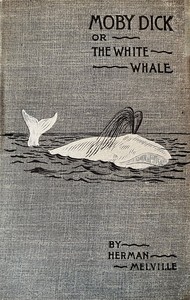
Moby Dick; Or, The Whale
Written by Herman Melville
Chaptra reads alongside you — AI insights, chapter breakdowns and reader discussions for every book. Join free
About this book
Read it with a club
Chaptra's fiction clubs — small groups reading the same books and talking as they go.


CraxMe Readers Book Club
Fiction
- 385 members
- 227 discussions
- Started December 2025
Welcome to the Readers Book Club. This is an informal group for like-minded people, where you can discuss books, share and recommend, track your reading progress, and lots more. Discuss Books — all about books. Discuss a particular book or genre, share your favourite quotes. Book Reviews — loved a book and highly recommend it? Or was it just average? Share your review and discuss with fellow readers. (May contain spoilers.) Group Reads — what is a book club without a group read! Buddy Reads — planning to read a book and looking for someone to read it with? Post in the Buddy Read request thread, find a reading buddy, and start discussing.
Read Moby Dick; Or, The Whale alongside people who are reading it too.
Also here: Doorstops, First Lines Club
Chaptra Prime — paid clubs, every club feature, and unlimited reading support, for $5 a month or $60 once.
See PrimeReading guide
Themes, characters and key ideas in Moby Dick; Or, The Whale, written by Chaptra AI.
- about 40 hours
- advanced
- epic
- philosophical
- dark
Herman Melville's "Moby Dick; Or, The Whale" is an epic 19th-century novel narrated by Ishmael, a melancholic sailor who embarks on a whaling voyage aboard the Pequod. The story quickly shifts from a quest for adventure to Captain Ahab's monomaniacal pursuit of Moby Dick, a legendary white whale that took his leg. Blending thrilling maritime adventure with profound philosophical and spiritual inquiry, the novel explores themes of obsession, man's struggle against nature, and the limits of human understanding. As Ahab drags his diverse crew towards their doom, the narrative delves into the complexities of good and evil, fate, and the vast, indifferent power of the natural world. Ultimately, it is a tragic tale of revenge that culminates in a catastrophic confrontation, leaving only Ishmael to tell the harrowing story.
“Call me Ishmael.”
Key themes
- Obsession and Revenge
- This is the central driving force of the narrative, embodied by Captain Ahab's relentless pursuit of Moby Dick. It explores the destructive nature of monomania, how a singular desire for vengeance can consume an individual, blind them to reason, and lead to self-destruction and the ruin of others.
- Man vs. Nature
- The novel deeply explores humanity's relationship with the natural world, particularly the vast, indifferent, and often terrifying power of the sea and its creatures. It questions whether nature is inherently malevolent, divine, or simply a force beyond human comprehension and control, and the hubris of attempting to conquer it.
- Fate vs. Free Will
- Melville constantly grapples with the question of whether human actions are predetermined by an external force (fate, God, nature) or if individuals possess true free will. Ahab often sees himself as an instrument of fate, yet he also makes deliberate choices driven by his own will, creating a tension that underpins the tragic narrative.
Worth discussing
How does Melville use the character of Moby Dick as a symbol, and what different interpretations can be made of the whale's significance?
Chapter-by-chapter breakdowns, character arcs and the full thematic analysis come with a free account.
Discussions
No one has started one yet
Questions this book opens up
No discussions yet
Be the first to start a discussion about this book!
Sign up to start the discussionReviews
No reviews yet
Be the first to review this book!