
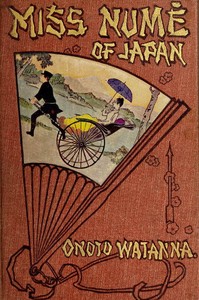
Miss Numè of Japan: A Japanese-American Romance
Written by Onoto Watanna
Chaptra reads alongside you — AI insights, chapter breakdowns and reader discussions for every book. Join free
About this book
Reading guide
Themes, characters and key ideas in Miss Numè of Japan: A Japanese-American Romance, written by Chaptra AI.
- about 8 hours
- intermediate
- Romantic
- Cultural
- Melancholy
Onoto Watanna's "Miss Numè of Japan" is a poignant late 19th-century romance exploring the intricate dance between Japanese tradition and American modernity. The narrative centers on Orito Takashima and Numè Watanabe, childhood sweethearts bound by an arranged marriage, whose lives diverge when Orito departs for an American education. This separation ignites a deep longing in Numè and sets the stage for a compelling exploration of cultural identity and personal desire. Upon Orito's return, the introduction of the spirited American Cleo Ballard further complicates their destined union, forcing all characters to confront societal expectations and their own hearts. The novel deftly weaves themes of love, duty, and cross-cultural understanding against a backdrop of evolving global perspectives.
“"To leave all that one loves, to journey to a world where even the air speaks a foreign tongue – that is a pain beyond words."”
Key themes
- Love vs. Duty/Tradition
- Central to the narrative is the tension between personal romantic desire and the societal/familial obligation of an arranged marriage. Orito and Numè are bound by tradition, but Orito's exposure to Western ideas of romantic love, and Numè's own burgeoning desires, challenge this pre-ordained path. The theme explores the emotional cost of adhering to duty versus pursuing individual happiness, and the profound impact of cultural norms on personal relationships.
- Cultural Identity and Hybridity
- This theme explores the challenges and complexities of navigating a dual cultural identity, particularly through Orito's character. His time in America imbues him with Western values and perspectives, creating a profound internal conflict when he returns to his traditional Japanese roots. The novel examines how individuals can be shaped by multiple cultures, leading to a sense of being 'between worlds,' and the difficulties of reconciling these different facets of self.
- Orientalism and Cross-Cultural Understanding
- The novel, written for a Western audience by a mixed-race author under a Japanese pseudonym, inevitably engages with the concept of Orientalism – the Western gaze upon the 'exotic' East. Watanna both caters to this fascination through evocative descriptions of Japanese customs and beauty, and subtly attempts to provide a more nuanced, though still romanticized, portrayal of Japanese characters and their inner lives. The theme questions the extent to which true understanding can exist across vast cultural divides and highlights the potential for misunderstanding and misrepresentation.
Worth discussing
How does Orito's American education change his perspective on his Japanese heritage and his arranged marriage? Is this change positive or negative?
Chapter-by-chapter breakdowns, character arcs and the full thematic analysis come with a free account.
Discussions
No one has started one yet
Questions this book opens up
No discussions yet
Be the first to start a discussion about this book!
Sign up to start the discussionReviews
No reviews yet
Be the first to review this book!