
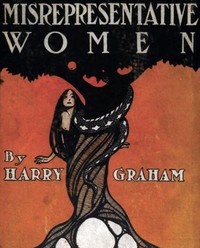
Misrepresentative Women
Written by Harry Graham
Chaptra reads alongside you — AI insights, chapter breakdowns and reader discussions for every book. Join free
About this book
Reading guide
Themes, characters and key ideas in Misrepresentative Women, written by Chaptra AI.
- about 3 hours
- intermediate
- humorous
- satirical
- witty
Harry Graham's "Misrepresentative Women" is an early 20th-century collection of humorous poems offering a satirical look at various women, both historical and archetypal. Through clever wit and caricature, Graham playfully critiques societal norms and expectations surrounding femininity of his era, highlighting absurdities and contradictions. The book features well-known figures like Eve and Lady Godiva, reimagined through Graham's comedic lens, blending historical context with literary allusions and social commentary. Ultimately, it serves as a light-hearted yet insightful invitation to reflect on the diverse roles and stereotypes of women, balancing admiration with gentle mockery to provoke both laughter and introspection.
“Her virtue, though quite beyond compare, Was oft eclipsed by her peculiar hair.”
Key themes
- Satire of Gender Roles and Societal Expectations
- This is the core theme of the collection. Graham uses humor and exaggeration to critique and comment on the prevailing societal norms, expectations, and stereotypes placed upon women in the early 20th century. He highlights the absurdities and contradictions in how women were perceived, from their historical roles to their domestic lives, challenging the rigid definitions of 'femininity' through wit.
- Humorous Deconstruction of Historical and Mythological Figures
- Graham takes well-known figures from history, mythology, and scripture and strips them of their gravitas, presenting them in a new, often irreverent, light. This theme involves re-examining established narratives through a comedic lens, revealing the human, often flawed, aspects beneath the legendary status. It's a playful form of historical revisionism.
- The Power of Wit and Light Verse as Social Commentary
- The collection itself is an embodiment of this theme. Graham demonstrates how sophisticated humor, clever wordplay, and accessible poetic forms can be incredibly effective tools for social critique. By making readers laugh, he disarms them, allowing the underlying commentary on societal flaws and human nature to land more subtly and perhaps more effectively than a serious treatise.
Worth discussing
How does Harry Graham use humor to critique or comment on societal norms concerning women in the early 20th century?
Chapter-by-chapter breakdowns, character arcs and the full thematic analysis come with a free account.
Discussions
No one has started one yet
Questions this book opens up
No discussions yet
Be the first to start a discussion about this book!
Sign up to start the discussionReviews
No reviews yet
Be the first to review this book!