
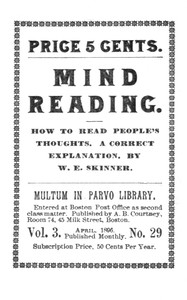
Mind reading : $b How to read people's thoughts
Written by W. E. (William E.) Skinner
Chaptra reads alongside you — AI insights, chapter breakdowns and reader discussions for every book. Join free
About this book
Reading guide
Themes, characters and key ideas in Mind reading : $b How to read people's thoughts, written by Chaptra AI.
- about 6 hours
- intermediate
- Instructive
- Analytical
- Practical
Mind Reading: How to Read People's Thoughts by W. E. Skinner is a late 19th-century instructional manual designed to demystify popular "mind reading" stage and parlor acts. Eschewing supernatural explanations, Skinner thoroughly explains "muscle reading," a technique relying on the astute observation of involuntary physical cues from a subject. The book provides step-by-step instructions for various feats, such as finding hidden objects or identifying thoughts, emphasizing practice and keen perception over psychic abilities. Beyond its core instructional content, it also incorporates miscellaneous anecdotes, advertisements, and poems, reflecting the common format of affordable publications of its era. Ultimately, it serves as both a practical guide to illusion and a historical artifact showcasing the popular entertainment and skeptical mindset of its time.
“The secret to reading minds lies not in mystical power, but in the keen observation of the human body's involuntary responses.”
Key themes
- Skepticism vs. Supernatural Belief
- This is the foundational theme of the book. Skinner systematically dismantles the notion that 'mind reading' is a supernatural or psychic ability, instead attributing it to observable human mechanics. The book serves as an argument for rational inquiry over credulity, encouraging readers to question seemingly inexplicable phenomena.
- The Power of Observation and Perception
- Central to muscle reading is the performer's ability to keenly observe minute, often unconscious, physical cues from a subject. The book highlights how trained perception can reveal subtle information that most people overlook, turning seemingly insignificant details into crucial data for the 'mind reader.'
- Performance and Illusion
- The book explores the theatricality inherent in 'mind reading' acts. It's not just about the technique but also about presenting the illusion convincingly to an audience. This theme delves into the art of showmanship, the psychology of audience engagement, and the creation of a believable performance.
Worth discussing
How does Skinner's approach to "mind reading" reflect the scientific and skeptical trends of the late 19th century?
Chapter-by-chapter breakdowns, character arcs and the full thematic analysis come with a free account.
Discussions
No one has started one yet
Questions this book opens up
No discussions yet
Be the first to start a discussion about this book!
Sign up to start the discussionReviews
No reviews yet
Be the first to review this book!