
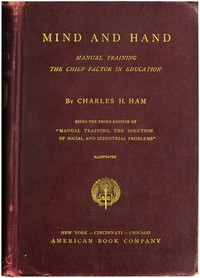
Mind and Hand: Manual Training the Chief Factor in Education
Written by Charles H. (Charles Henry) Ham
Chaptra reads alongside you — AI insights, chapter breakdowns and reader discussions for every book. Join free
About this book
Read it with a club
Small groups reading the same books and talking as they go.


News
- 4 members
- 1,813 discussions
- Active Sep 11
Read Mind and Hand: Manual Training the Chief Factor in Education alongside people who are reading it too.
Also here: News Bulletin, Just Joking....
Chaptra Prime — paid clubs, every club feature, and unlimited reading support, for $5 a month or $60 once.
See PrimeReading guide
Themes, characters and key ideas in Mind and Hand: Manual Training the Chief Factor in Education, written by Chaptra AI.
- about 8 hours
- advanced
- Didactic
- Inspirational
- Reformist
Charles H. Ham's "Mind and Hand: Manual Training the Chief Factor in Education" is a late 19th-century educational treatise advocating for a radical reform that integrates practical manual training with traditional intellectual development. Ham champions an "Ideal School" where labor is dignified, and hands-on experience, particularly with tools, is central to learning, challenging the conventional education system's neglect of practical skills. He argues that this blend of mental and physical engagement fosters not only intellectual growth but also moral character and essential practical competencies in students. The book posits manual training as the fundamental element for a truly well-rounded and effective educational experience, drawing inspiration from historical educational theorists to build its persuasive case for a transformative pedagogy.
“Mind and hand must be united in the work of education.”
Key themes
- Integration of Mind and Hand
- This is the core theme of the book, arguing that intellectual development (mind) and practical, manual experience (hand) are not separate but intrinsically linked and mutually reinforcing. Ham contends that true education requires engaging both faculties to create a deeper, more effective learning environment. This integration fosters a comprehensive understanding that transcends mere theoretical knowledge.
- Dignity of Labor
- Ham passionately argues for the inherent value and nobility of manual labor, seeking to elevate its status beyond a mere means of production. He asserts that engaging in physical work, particularly skilled craftsmanship, is not only economically vital but also intellectually stimulating and morally uplifting. This theme directly challenges societal prejudices against 'blue-collar' work prevalent in his era.
- Educational Reform
- The entire book serves as a powerful call for a fundamental overhaul of the existing educational system. Ham criticizes the status quo for its theoretical bias and its failure to adequately prepare students for life. He proposes a transformative vision focused on practical engagement and holistic development, aiming to reshape how education is conceived and delivered.
Worth discussing
How does Ham's vision of the 'Ideal School' compare with modern educational models? What elements remain relevant?
Chapter-by-chapter breakdowns, character arcs and the full thematic analysis come with a free account.
Discussions
No one has started one yet
Questions this book opens up
No discussions yet
Be the first to start a discussion about this book!
Sign up to start the discussionReviews
No reviews yet
Be the first to review this book!