
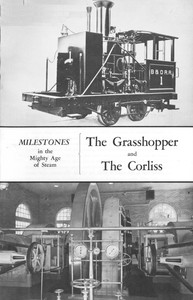
Milestones in the Mighty Age of Steam: The Grasshopper and the Corliss
Written by Anonymous
Chaptra reads alongside you — AI insights, chapter breakdowns and reader discussions for every book. Join free
About this book
Reading guide
Themes, characters and key ideas in Milestones in the Mighty Age of Steam: The Grasshopper and the Corliss, written by Chaptra AI.
- about 7 hours
- intermediate
- informative
- historical
- celebratory
Milestones in the Mighty Age of Steam: The Grasshopper and the Corliss offers a unique historical account of two foundational machines of the American Industrial Revolution. Written in the mid-20th century, likely by an anonymous author, the book delves into the evolution of steam technology through the lens of the Grasshopper locomotive and the Corliss steam engine. It explores their individual innovations, their collective impact on transportation and industry, and their enduring legacy, culminating in their preservation as historical artifacts. The narrative employs a distinctive literary device, allowing the machines themselves to recount their stories, thereby weaving a rich tapestry of technological advancement and societal transformation.
“"They called me a 'hopper,' a curious contraption, but I knew, even then, that I carried the future of a nation upon my wheels."”
Key themes
- Technological Innovation and Progress
- This theme explores how the ingenuity behind the Grasshopper and Corliss engines drove unprecedented advancements in transportation and industrial capacity. The book details the specific design innovations that made these machines groundbreaking and how their introduction spurred a cascade of further technological development, fundamentally altering the fabric of American society and economy.
- Industrialization and Societal Transformation
- The book vividly illustrates how the advent of steam power, personified by the Grasshopper and Corliss, reshaped American society. It examines the shift from agrarian economies to industrial powerhouses, the growth of cities, the creation of new industries, and the changing daily lives of ordinary people. The narrative emphasizes the profound and often rapid changes brought about by these technological 'milestones.'
- The Legacy of Machines and Historical Preservation
- A central theme is the importance of recognizing and preserving the physical embodiments of historical progress. The book culminates with the Grasshopper and Corliss engines being enshrined in Carillon Park, underscoring the idea that these machines are more than just old technology; they are tangible links to the past, capable of teaching future generations about human endeavor and the march of history. It explores how objects can become symbols of enduring legacy.
Worth discussing
How does the personification of the Grasshopper and Corliss engines enhance the historical narrative? What are its strengths and potential weaknesses?
Chapter-by-chapter breakdowns, character arcs and the full thematic analysis come with a free account.
Discussions
No one has started one yet
Questions this book opens up
No discussions yet
Be the first to start a discussion about this book!
Sign up to start the discussionReviews
No reviews yet
Be the first to review this book!