
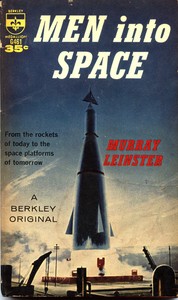
Men into space
Written by Murray Leinster
Chaptra reads alongside you — AI insights, chapter breakdowns and reader discussions for every book. Join free
About this book
Reading guide
Themes, characters and key ideas in Men into space, written by Chaptra AI.
- about 8 hours
- intermediate
- adventurous
- tense
- hopeful
Murray Leinster's "Men into Space" is a foundational science fiction novel from the early 1960s, chronicling First Lieutenant Ed McCauley's historic journey as the first human to venture into space. The narrative masterfully blends the intense anticipation and profound anxieties associated with such a pioneering feat, detailing McCauley's personal reflections on bravery and the unknown. As he prepares for and executes the monumental rocket launch, the story explores the human spirit of adventure and ingenuity against a backdrop of rapidly advancing technology. The novel culminates in McCauley's transformative experience, forever altering his perspective and solidifying his place in history.
“The silence out here wasn't empty; it was pregnant with possibility, a canvas for the future.”
Key themes
- The Spirit of Exploration and Pioneering
- This theme is central to the novel, celebrating humanity's innate drive to push boundaries and venture into the unknown. It highlights the courage required to be 'first' and the profound significance of breaking new ground, both literally and figuratively, in the quest for knowledge and progress.
- Human Ingenuity and Technological Progress
- The novel underscores humanity's capacity for innovation and problem-solving, showcasing the triumph of science and engineering. It celebrates the collective effort and intellectual prowess required to overcome immense technical challenges and achieve seemingly impossible feats, reflecting the optimism of the early space age.
- Fear vs. Courage
- This theme explores the internal struggle of the protagonist as he confronts the immense dangers and uncertainties of space travel. It highlights the psychological toll of pioneering and the profound bravery required to push past natural human fear in pursuit of a greater goal, making the hero relatable despite his extraordinary circumstances.
Worth discussing
How does Leinster capture the psychological impact of being the first person in space? What anxieties and excitements does Ed McCauley experience?
Chapter-by-chapter breakdowns, character arcs and the full thematic analysis come with a free account.
Discussions
No one has started one yet
Questions this book opens up
No discussions yet
Be the first to start a discussion about this book!
Sign up to start the discussionReviews
No reviews yet
Be the first to review this book!