
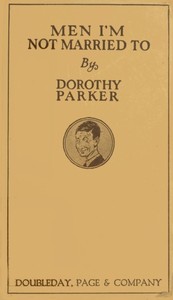
Men I'm Not Married To
Written by Dorothy Parker
Chaptra reads alongside you — AI insights, chapter breakdowns and reader discussions for every book. Join free
About this book
Reading guide
Themes, characters and key ideas in Men I'm Not Married To, written by Chaptra AI.
- about 8 hours
- intermediate
- humorous
- witty
- satirical
Dorothy Parker's "Men I'm Not Married To" is a brilliant collection of early 20th-century humorous vignettes, offering a satirical lens on male behavior and social interactions. Through the sharp wit of an unnamed narrator, the book presents a series of character sketches, each a masterclass in observational humor and social commentary. From the boisterous to the neurotic, the male figures encountered by the narrator serve as a canvas for Parker's renowned epigrammatic style and keen insights into human foibles. The collection ultimately invites readers to appreciate the absurdity of everyday life and the complexities of gender dynamics, all while reveling in Parker's enduring comedic genius and underlying poignancy.
“The only 'ism' I'm interested in is alcoholism.”
Key themes
- Gender Roles and Expectations
- Parker meticulously observes and critiques the societal expectations placed upon both men and women in the early 20th century. The men are often portrayed as conforming to or failing to meet traditional masculine ideals (e.g., provider, witty conversationalist, strong silent type), while the narrator subtly challenges the expectations of female docility or romantic idealism.
- Wit as a Defense Mechanism and Weapon
- The narrator's sharp wit is not merely for humor; it serves as her primary tool for navigating social situations, expressing her true feelings, and maintaining a sense of self in a world that often frustrates her. It's a shield against boredom, disappointment, and the often-patronizing attitudes of the men she encounters, but also a precise weapon for critique.
- The Absurdity of Social Interaction
- Parker's vignettes frequently highlight the inherent silliness and often meaningless rituals of social engagement. Through exaggerated characters and pointed observations, she exposes the pretenses, awkwardness, and superficiality that often define human connection, particularly in urban settings.
Worth discussing
How does Parker use humor and satire to critique gender roles and societal expectations of her time?
Chapter-by-chapter breakdowns, character arcs and the full thematic analysis come with a free account.
Discussions
No one has started one yet
Questions this book opens up
No discussions yet
Be the first to start a discussion about this book!
Sign up to start the discussionReviews
No reviews yet
Be the first to review this book!