
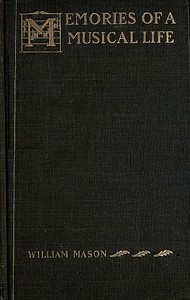
Memories of a Musical Life
Written by William Mason
Chaptra reads alongside you — AI insights, chapter breakdowns and reader discussions for every book. Join free
About this book
Reading guide
Themes, characters and key ideas in Memories of a Musical Life, written by Chaptra AI.
- about 10 hours
- intermediate
- Reflective
- Informative
- Historical
William Mason's "Memories of a Musical Life" is a rich early 20th-century memoir chronicling his personal journey through the vibrant 19th-century musical landscape. As the son of pioneering American music educator Lowell Mason, the author provides a unique perspective on the development of music education in the United States, particularly contrasting Boston's influence with New York's. The narrative interweaves personal anecdotes of Mason's musical training and career with encounters with legendary composers such as Liszt and Chopin. Beyond a personal history, the book serves as an invaluable historical document, tracing the evolution of classical music in America and highlighting foundational events like the first performance of a Beethoven symphony in the country. It offers profound insights into the cultural shifts and influential figures that shaped American musical identity.
“"My father, Lowell Mason, laid the very cornerstone of public music education in America, a legacy I have striven to uphold and expand."”
Key themes
- The Evolution of American Music
- This theme is central to the memoir, tracing how classical music transitioned from a nascent, often imported curiosity to a more established and integrated part of American culture. Mason details the foundational efforts in music education, the introduction of European masterworks, and the growth of concert life, illustrating America's journey in developing its own musical identity and infrastructure.
- Legacy and Influence
- The memoir deeply explores the concept of legacy, particularly through the father-son relationship between Lowell and William Mason. It examines how the pioneering work of one generation directly influences and shapes the path of the next, and how the influence of great artists (like Liszt and Chopin) extends across geographical and temporal boundaries to inspire new talent.
- Musical Education and Pedagogy
- A significant portion of the memoir is dedicated to detailing the philosophies and practicalities of music education. From Lowell Mason's innovative public school methods to William's own advanced studies with European masters, the book offers insights into various pedagogical approaches, the importance of foundational training, and the pursuit of artistic excellence through disciplined study.
Worth discussing
How does William Mason's memoir illuminate the challenges and triumphs of establishing a classical music culture in 19th-century America?
Chapter-by-chapter breakdowns, character arcs and the full thematic analysis come with a free account.
Discussions
No one has started one yet
Questions this book opens up
No discussions yet
Be the first to start a discussion about this book!
Sign up to start the discussionReviews
No reviews yet
Be the first to review this book!