
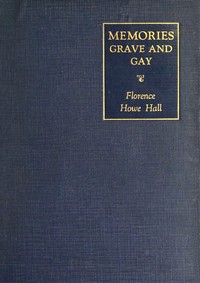
Memories grave and gay
Written by Florence Howe Hall
Chaptra reads alongside you — AI insights, chapter breakdowns and reader discussions for every book. Join free
About this book
Reading guide
Themes, characters and key ideas in Memories grave and gay, written by Chaptra AI.
- about 9 hours
- intermediate
- reflective
- nostalgic
- inspiring
Florence Howe Hall's "Memories Grave and Gay" is a poignant late 19th-century memoir offering an intimate look into the life and upbringing of the author, primarily through the lens of her renowned parents, Dr. Samuel Gridley Howe and Julia Ward Howe. The narrative beautifully intertwines personal anecdotes of family life at "Green Peace" with broader historical contexts, detailing the significant impact of their philanthropic endeavors and literary pursuits on her formative years. Hall reflects on the intellectual richness of her childhood, marked by encounters with notable figures and the profound influence of her parents' commitment to social justice and education. This work stands as a valuable testament to a unique American family's legacy and the cultural tapestry of its era, blending solemn reflections with joyful reminiscences.
“While specific quotes are not available without the full text, significant quotes would likely revolve around the profound influence of her parents: 'My father's humanitarian spirit was the very air we breathed.'”
Key themes
- Family Legacy and Parental Influence
- This theme is central to the memoir, exploring how the lives, values, and public service of Dr. Samuel Gridley Howe and Julia Ward Howe profoundly shaped their daughter Florence's identity and worldview. It delves into the transmission of ideals such as philanthropy, intellectual curiosity, and social justice across generations, showing how Florence inherited and reflected upon this rich heritage.
- Philanthropy and Social Reform
- The memoir extensively explores the theme of philanthropy and social reform through the exemplary lives of Florence's parents. It details their dedication to improving society, particularly Dr. Howe's groundbreaking work for the blind and Julia Ward Howe's advocacy for abolition and women's rights, illustrating the moral imperative that guided their public and private lives.
- The Power of Memory and Narrative
- As a memoir, this book inherently explores the theme of memory—its selectivity, its capacity to shape understanding, and its role in constructing a personal and historical narrative. Florence Howe Hall meticulously reconstructs her past, reflecting on how individual recollections contribute to a larger family and cultural history, and how the act of remembering itself is a form of creation.
Worth discussing
How does Florence Howe Hall's role as a daughter influence her portrayal of her parents? Are there moments where her perspective might be seen as biased or idealized?
Chapter-by-chapter breakdowns, character arcs and the full thematic analysis come with a free account.
Discussions
No one has started one yet
Questions this book opens up
No discussions yet
Be the first to start a discussion about this book!
Sign up to start the discussionReviews
No reviews yet
Be the first to review this book!